
Porto Cervo is the village at the heart of the Costa Smeralda — a place built deliberately, in living memory, as a retreat for an international jet set, and still shaped today by the architectural rules laid down when it was founded. This guide covers how the village came to look the way it does, what’s actually worth seeing on foot, and the practical basics of getting there, getting around, and parking.
A Village Built on Purpose
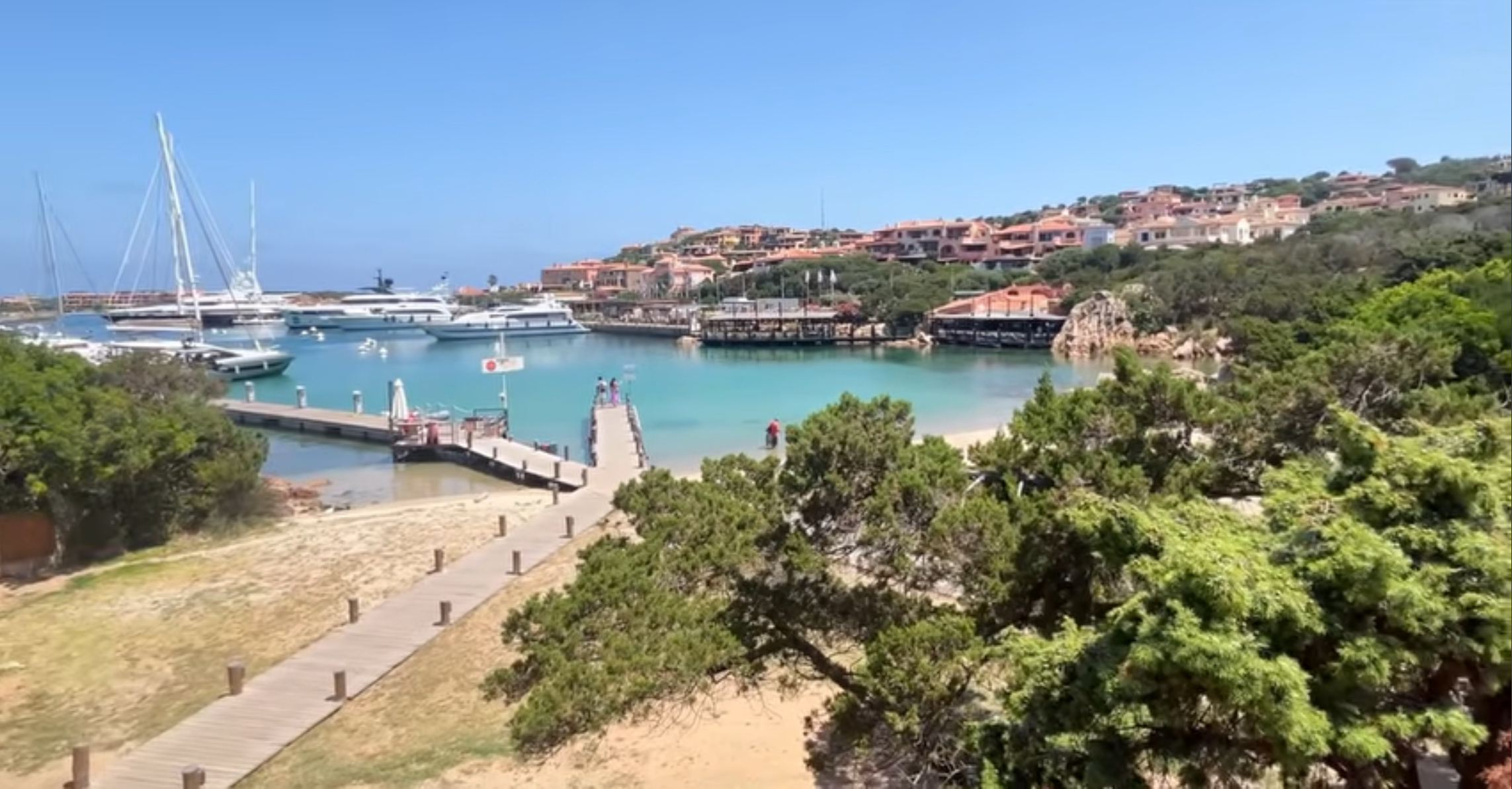
Porto Cervo didn’t grow up gradually like most Mediterranean villages — it was designed. In 1962, Prince Karim Aga Khan IV formed the Consorzio Costa Smeralda to develop this stretch of coastline, and brought in a small group of architects to shape it, with Luigi Vietti taking the lead on Porto Cervo’s village center. An Architecture Committee reviewed every building proposal against a strict set of guidelines: low, irregular forms rather than straight modern lines, arched openings, local granite, juniper wood, and pastel plaster mixed with natural pigments — a style meant to look as though it had evolved from Sardinian rural building traditions rather than been imported.
That control is why Porto Cervo still reads as a coherent village rather than a strip of resort development — no glass towers, no uniform hotel blocks, just clustered stone-and-plaster buildings that step down toward the water. For the broader story of how the Costa Smeralda itself came together, see our Costa Smeralda destination guide.
Getting to Porto Cervo
Olbia is the practical gateway to Porto Cervo. By car, plan on roughly 35 to 55 minutes from Olbia Costa Smeralda Airport, depending on your exact destination within the village and how heavy summer traffic is on the approach roads — the lower end applies in the off-season, the higher end in July and August.
Coming from elsewhere on Sardinia involves a substantially longer drive. Cagliari generally requires around three hours or more, while Alghero commonly takes roughly two and a half to three hours, depending on the route, traffic and conditions. Olbia remains the most practical gateway for a Porto Cervo-focused stay.
Getting Around: Car, Bus, and On Foot
A rental car is the most flexible way to see the wider Costa Smeralda — the beaches, other villages, and countryside villas are spread out enough that walking or relying on buses alone will limit what you can reach in a day.
For getting into Porto Cervo itself without a car, ARST — Sardinia’s regional public transport operator — runs Line 604, an established route connecting Arzachena, Porto Cervo, Baia Sardinia, and Olbia. Timetables and frequency can change with the season, so rather than printing specific departure times here, check the current schedule directly before you travel:
ARST official site — current timetables
Porto Cervo’s central sights can be connected on foot, but the village is spread across sloping ground. Expect uphill sections and a longer walk between the Piazzetta, Stella Maris and parts of Marina Nuova, particularly in hot weather.
Parking in Porto Cervo
Parking is one of the most common frustrations visitors mention, especially in peak summer. The Comune di Arzachena operates paid parking at several lots in and around Porto Cervo during the tourist season, which has typically run from early summer into early autumn — but exact start and end dates, rates, and which specific lots are affected can shift from year to year, and separate areas managed by the Costa Smeralda Consortium may follow different rules again.
Don’t assume parking is automatically free outside the marked paid season — arrangements vary by lot, so the safest approach is always to follow the signage posted on site for current rates and hours. For the most current official information, see:
Comune di Arzachena — parking information
In high season, arriving early in the day meaningfully improves your odds of finding a spot near the center.
The Piazzetta and the Village Center
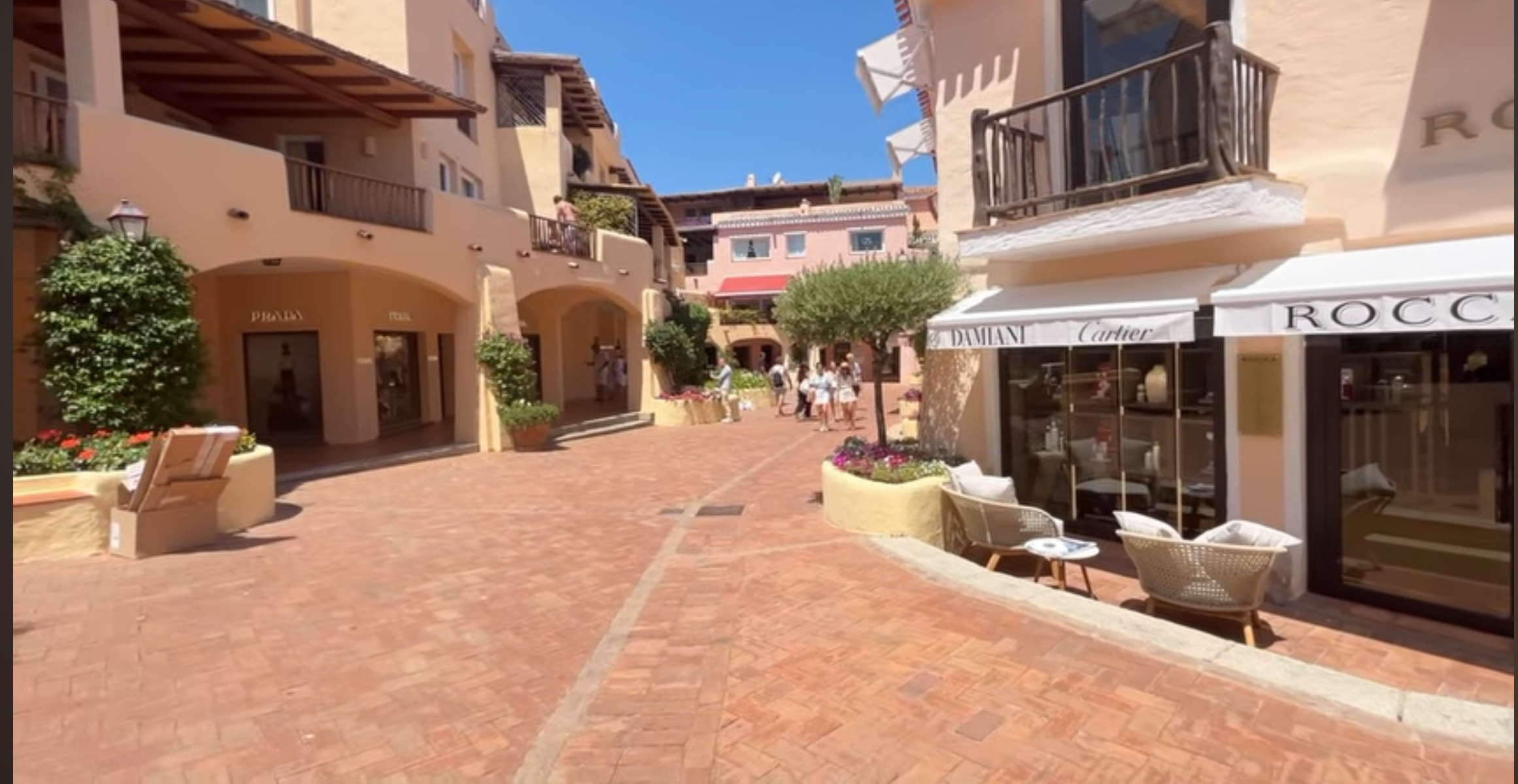
The Piazzetta is Porto Cervo’s original core — a small, stepped square lined with boutiques and cafés, built as the first part of the village. It’s less a shopping destination in the practical sense and more a place to walk through slowly: the architecture itself, all arches and warm stone, is the main attraction, especially in the early evening when the square fills with people arriving from the marina below.
The Marina: Porto Vecchio and Marina Nuova
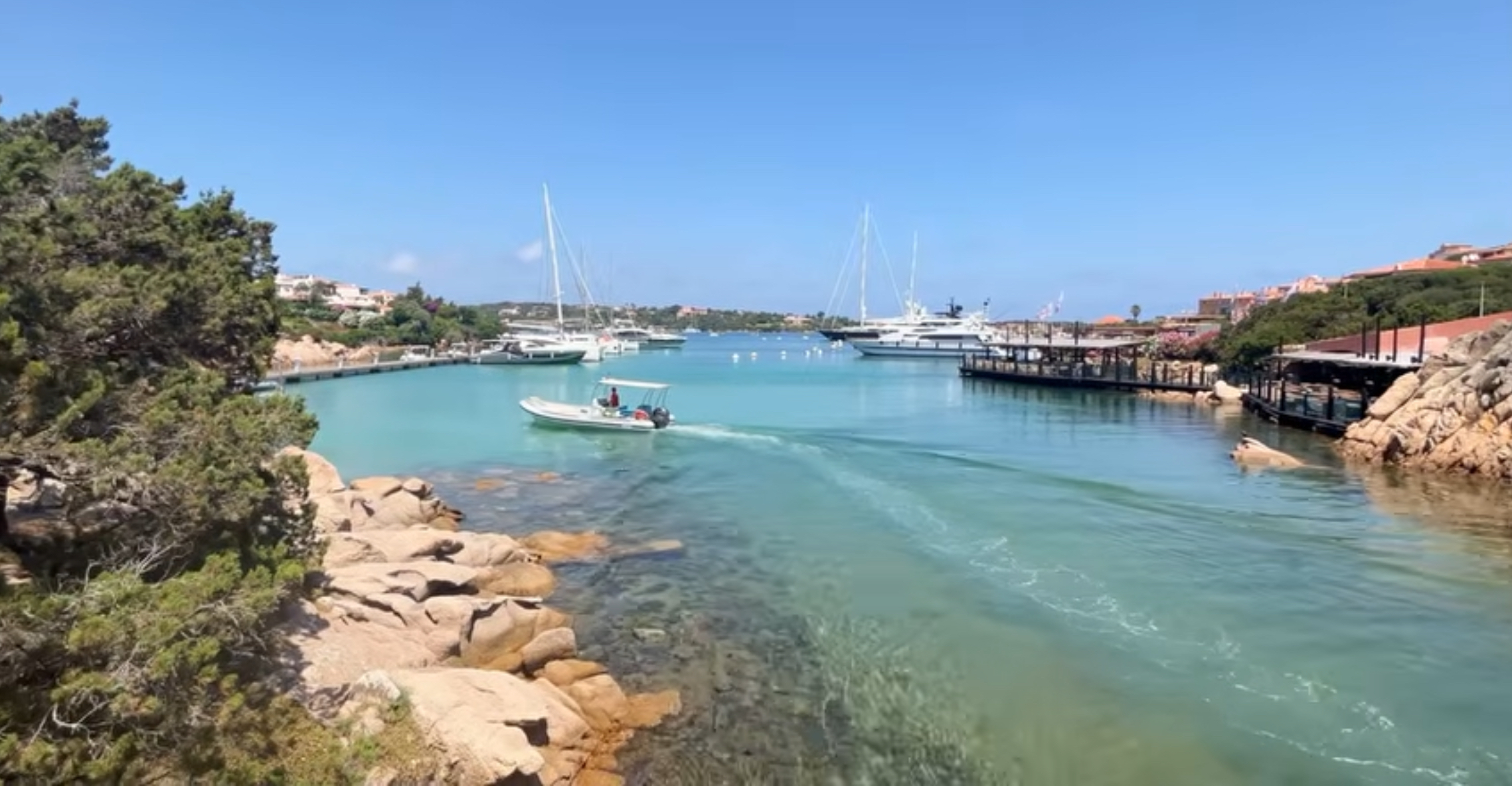
Porto Cervo’s marina is really two connected areas. Porto Vecchio — also called Molo Est — is the older, eastern part of the harbor closest to the original village center, with a more intimate, atmospheric feel. Marina Nuova is the larger, more modern marina complex in the Marina Village area, built to expand capacity as Porto Cervo’s reputation as a yachting destination grew.
Visitors can walk through the public waterfront areas of both marina sections — you don’t need a boat or a reservation to enjoy them. Expect to see everything from classic sailing yachts to some of the largest private vessels in the Mediterranean, especially in peak summer, alongside waterfront restaurants and bars. It’s a place for a slow walk and people-watching rather than a checklist of things to do.
Stella Maris Church
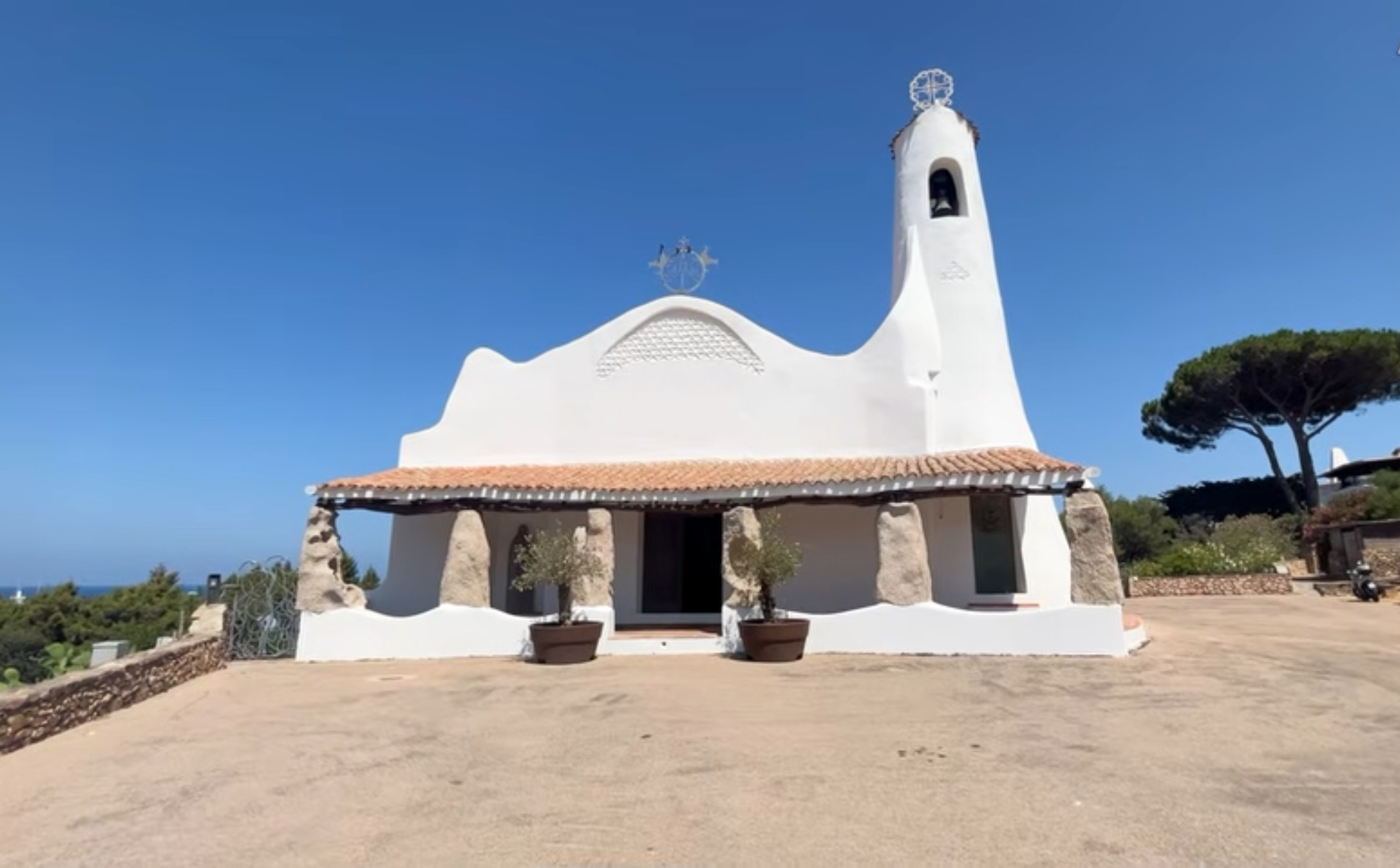
On the high ground above the marina sits Stella Maris, Porto Cervo’s small parish church and one of its most distinctive buildings. It was designed by architect Michele Busiri Vici and built in the late 1960s, on land donated by Prince Karim Aga Khan. Rather than following a traditional Sardinian church plan, Stella Maris reinterprets local rural architecture in soft, curving, all-white forms — a rounded façade, an elliptical bell tower, and a roofline that echoes the rocky landscape around it.
Inside, the church holds a small but genuine collection of art: bronze entrance doors by sculptor Luciano Minguzzi, a 17th- to 18th-century Neapolitan pipe organ, and a painting of the Mater Dolorosa attributed to El Greco. The view back down over the marina from the church grounds is one of the best vantage points in the village.
Nearby Beaches
Porto Cervo sits close to some of the Costa Smeralda’s best-known beaches, including Spiaggia del Principe, Grande Pevero, and Liscia Ruja, most a short drive away. For a full comparison of access, parking, and what each beach is actually like, see our guide to the best beaches of Costa Smeralda.
Day Trip or Overnight Stay?
| Day Trip | Overnight Stay |
|---|---|
| Enough time to see the Piazzetta, the marina, and Stella Maris in a few unhurried hours | Time to properly enjoy the marina at both midday and evening, when the atmosphere changes noticeably |
| Works well paired with a beach day nearby, using Porto Cervo as a late-afternoon stop | May reduce the need to drive into the center if your accommodation is within walking distance or provides transportation |
| More budget-friendly, since Porto Cervo lodging and dining are priced at the high end | Better for experiencing the village after the day-trip crowds thin out |
| Best if you’re based elsewhere on the Costa Smeralda or in Olbia | Worth it if Porto Cervo itself, rather than the wider coast, is the point of your visit |
For most first-time visitors exploring the wider Northeast, a day trip is the more practical choice — Porto Cervo rewards a slow few hours more than it requires a full stay.
Best Time to Visit
July and August bring Porto Cervo’s most famous atmosphere — full marina, busy Piazzetta, packed beaches nearby — along with the heaviest traffic, tightest parking, and highest prices. Late spring (May, June) and early autumn (September, into early October) offer a quieter, more relaxed version of the same village, with easier parking and more comfortable weather for walking around. Outside the summer season, some restaurants, shops, and services scale back or close entirely, so it’s worth checking ahead if you’re visiting in winter.
Practical Tips
- Porto Cervo is genuinely expensive — dining, drinks, and shopping here sit well above typical Sardinia prices, so set expectations accordingly.
- Porto Cervo’s evening atmosphere tends to be polished, and some upscale restaurants or clubs may maintain their own dress policies. There is no general dress code for walking through the Piazzetta or marina, so check directly with any particular venue.
- If you’re driving in for the evening, arrive earlier than you think you need to — both traffic and parking availability get noticeably worse after early evening in peak season.
- Cards are widely accepted, but keep more than one payment method available and follow the instructions displayed at the particular parking lot or machine.
Where This Fits
Porto Cervo is one stop within the broader Costa Smeralda & Northeast — see our Costa Smeralda & Northeast hub for the full range of beaches, towns, and guides in the area. If you have extra time, the La Maddalena Archipelago makes for a natural full-day excursion further up the coast. For a practical route connecting Porto Cervo with the wider northeast coast, see our five-day Northeast Sardinia itinerary.