
Cagliari and the south of Sardinia give visitors two genuinely different ways to base a trip: inside a walkable, historic capital city with its own beach a bus ride away, or out on the coast in a smaller resort town built around one specific stretch of sea. Neither is objectively “better” — the right choice depends on how much walking you want to do, whether you’re renting a car, and how much of your trip is about beaches versus city life. This guide compares the main options honestly, area by area, so you can match your trip to the right base before you start comparing specific listings.

Quick Answer: Which Base Fits Your Trip?
- First time in Sardinia, no car, want to walk everywhere: Stay in Marina or Stampace, Cagliari
- Want a quiet, characterful historic setting with fewer crowds: Castello, Cagliari
- Want to wake up and walk straight onto sand: Poetto, Cagliari
- Traveling with a car and prioritizing beach variety: Villasimius, Costa Rei, or Chia
- Interested in archaeology and a calmer, mid-size coastal town: Pula
- Traveling with family and want a long, easy, sandy beach: Costa Rei
- Want city culture and a beach day trip, without committing to either full-time: Cagliari, with day trips out
- Prioritizing nightlife and restaurant variety: Cagliari (Marina/Stampace) in the city, or Villasimius on the coast
Cagliari or the Southern Coast?
This is the first real decision, and it’s worth making deliberately rather than defaulting to whichever sounds more familiar. Cagliari gives you a real, working Italian city: museums, a genuine restaurant scene that doesn’t shut down in October, walkable historic neighborhoods, and easy onward travel by train, bus, or ferry. Its own beach, Poetto, has a more urban setting than the secluded coves farther along the southern coast, though it’s an excellent city beach in its own right.
The southern coast — Villasimius, Costa Rei, Pula, and Chia — trades city convenience for dune-backed beaches, clearer water in many spots, and a much quieter pace once the day-trippers leave. The tradeoff is that these towns are genuinely seasonal, with tourism-focused businesses generally operating from spring through autumn and scaling back or closing for winter. You’re also more dependent on a car for almost everything out there. If you want both experiences, a common and sensible pattern is to split a trip: a few nights in Cagliari for the city, then relocate to the coast for the beach-focused half.
Where to Stay Within Cagliari
Cagliari’s historic center is compact and built on a hill, divided into a handful of named districts that each have a distinct character. All are within Cagliari’s walkable core. Each historic district contains or borders streets covered by one of Cagliari’s ZTLs, so drivers should verify the exact location of their accommodation before entering. ZTL boundaries and operating hours can change, so treat any specific hours you find elsewhere (including in older versions of this guide) as a starting point rather than a guarantee — always get written arrival, access, and parking instructions directly from your accommodation before your trip, and check the current official municipal ZTL information if you plan to drive into the center.
Castello
Castello is Cagliari’s fortified hilltop quarter — cathedral, bastions, university buildings, and sweeping views over the gulf. It’s genuinely historic rather than styled to look it, and it suits travelers who want to sleep inside the most atmospheric part of the old city and don’t mind steep, narrow streets.
- Best for: Atmosphere and views, especially for couples and travelers not counting on a flat walk everywhere
- Beach access: Not walkable — Poetto requires a bus or taxi down the hill and along the coast
- Restaurants and evenings: A smaller, more local set of restaurants and wine bars than Marina, with some of the city’s best sunset viewpoints from the bastions
- Walkability: Excellent within the district, but expect stairs and inclines — a genuine consideration with luggage or mobility limitations
- Car needed: No — Castello sits within a ZTL area, on top of the general difficulty of driving and parking on narrow hilltop streets; confirm current hours and any resident/guest exceptions with your accommodation
- Airport convenience: Similar to the rest of central Cagliari — a taxi, or the airport train to Cagliari Centrale followed by a short taxi or uphill walk
Main tradeoff: Unmatched atmosphere and views, at the cost of hills, stairs, and being the historic district farthest from the beach.
Some accommodation links in this guide may be affiliate links. If you book through them, we may earn a commission at no additional cost to you.
[AFFILIATE CTA: View accommodation in Cagliari]
Marina
Marina is Cagliari’s liveliest historic district: a dense grid of narrow streets packed with restaurants, wine bars, and small shops, busy well into the evening. It’s a strong fit for first-time visitors who want to be in the middle of everything.
- Best for: First-timers who want restaurants, the port, and the train station within easy reach
- Beach access: Not walkable, but the best-connected district for reaching Poetto by bus — see the Poetto section below for current routes
- Restaurants and evenings: The strongest concentration of dining and evening activity of any Cagliari district
- Walkability: Flat and easy to navigate, unlike hillier Castello
- Car needed: No — Marina is largely pedestrianized in its core and contains or borders ZTL-restricted streets; confirm current hours and guest-parking arrangements directly with your accommodation
- Airport convenience: The most convenient district in the city — Piazza Matteotti (the train and bus hub) sits right at Marina’s edge
Main tradeoff: Best restaurant density and transport links in the city, but can be noisy at night given the concentration of bars.
Stampace
Stampace mixes everyday local life with tourist-friendly streets, including some of the city’s best local markets. It has a calmer, more residential feel than Marina while remaining just as central.
- Best for: Travelers wanting central convenience with a quieter evening atmosphere than Marina
- Beach access: Not walkable, but well placed for bus routes to Poetto
- Restaurants and evenings: Good, if slightly less dense than Marina, with more genuinely local trattorias
- Walkability: Flat in its lower section (Stampace Basso), rising toward Castello in its upper section (Stampace Alto)
- Car needed: No — Stampace contains or borders ZTL-restricted streets across both its upper and lower sections; confirm current hours with your accommodation rather than assuming any window is free for casual parking
- Airport convenience: Very good — one of the two historic districts closest to Cagliari’s train station, alongside Marina
Main tradeoff: Central and calmer than Marina, but with less of Castello’s postcard atmosphere.
Villanova
Villanova is a quieter, more residential corner of the historic center, with a small pedestrianized core and a slower pace than Marina or Stampace.
- Best for: Travelers wanting a genuinely local, less touristy base within the historic center
- Beach access: Not walkable; similar bus-dependent access to Poetto as the other central districts
- Restaurants and evenings: Fewer options than Marina, but generally more local and less tourist-priced
- Walkability: Generally walkable, although gradients increase as streets approach Castello
- Car needed: No — Villanova contains or borders ZTL-restricted streets and a small pedestrian zone at its core
- Airport convenience: A short walk or taxi ride further from the station than Marina/Stampace, but still easily central
Main tradeoff: Authentic and uncrowded, but with thinner restaurant and nightlife options than Marina or Stampace.
Poetto and the Beachfront Area
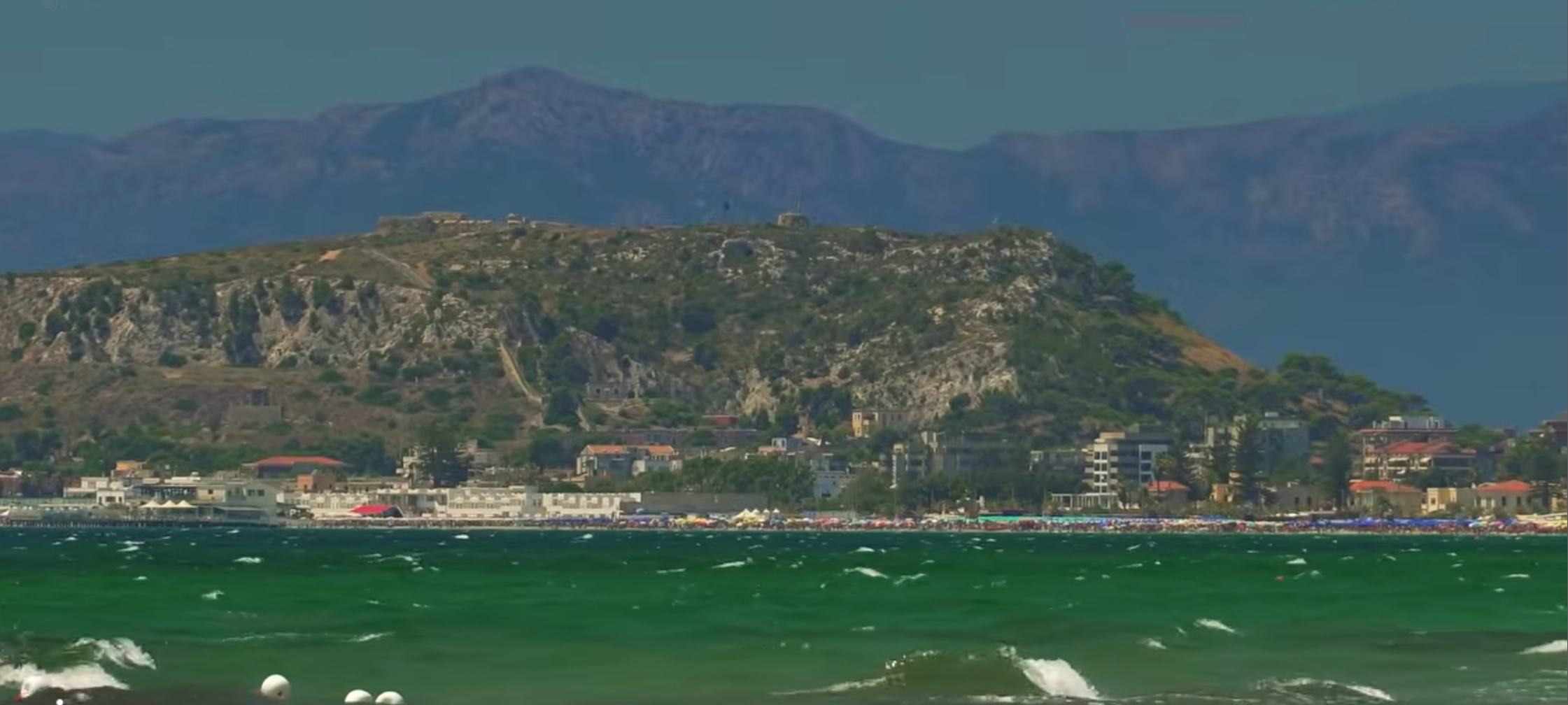
Poetto is a long, lively beachfront promenade lined with beach clubs, bars, and restaurants — busy and social in summer, much quieter and more residential outside peak season. It suits travelers, especially families, who want to walk onto sand without leaving the city.
- Best for: Beach access without leaving Cagliari, particularly families
- Beach access: Excellent — this is literally the beach. Poetto includes free public sections alongside seasonal serviced concessions offering amenities such as loungers and umbrellas
- Restaurants and evenings: Plenty of beachfront dining and bars in summer; noticeably quieter and more limited off-season
- Walkability: Good along the promenade itself, but Poetto sits a few kilometers from the historic center — not somewhere to walk into town from casually
- Car needed: Helpful but not essential. CTM city buses currently serve the Poetto corridor — PF and PQ are the routes most commonly cited, with seasonal services such as Poetto Express sometimes added in summer — but routes, termini, and schedules can change, so check the current CTM sea-route timetable before relying on a specific line. If driving, roadside parking exists along the promenade for much of the year but fills quickly on summer weekends
- Airport convenience: Less convenient than the historic center — expect a taxi, a transfer through the city, or a longer bus ride
- Parking/ZTL: Poetto’s surrounding streets fall within ZTL restrictions that can change seasonally; daytime beach parking is a separate, practical challenge from any ZTL, especially in July and August
Main tradeoff: Direct beach access and a lively summer atmosphere, at the cost of distance from the historic center’s restaurants and sights, plus real summer parking pressure.
Where to Stay Elsewhere in Southern Sardinia
Villasimius
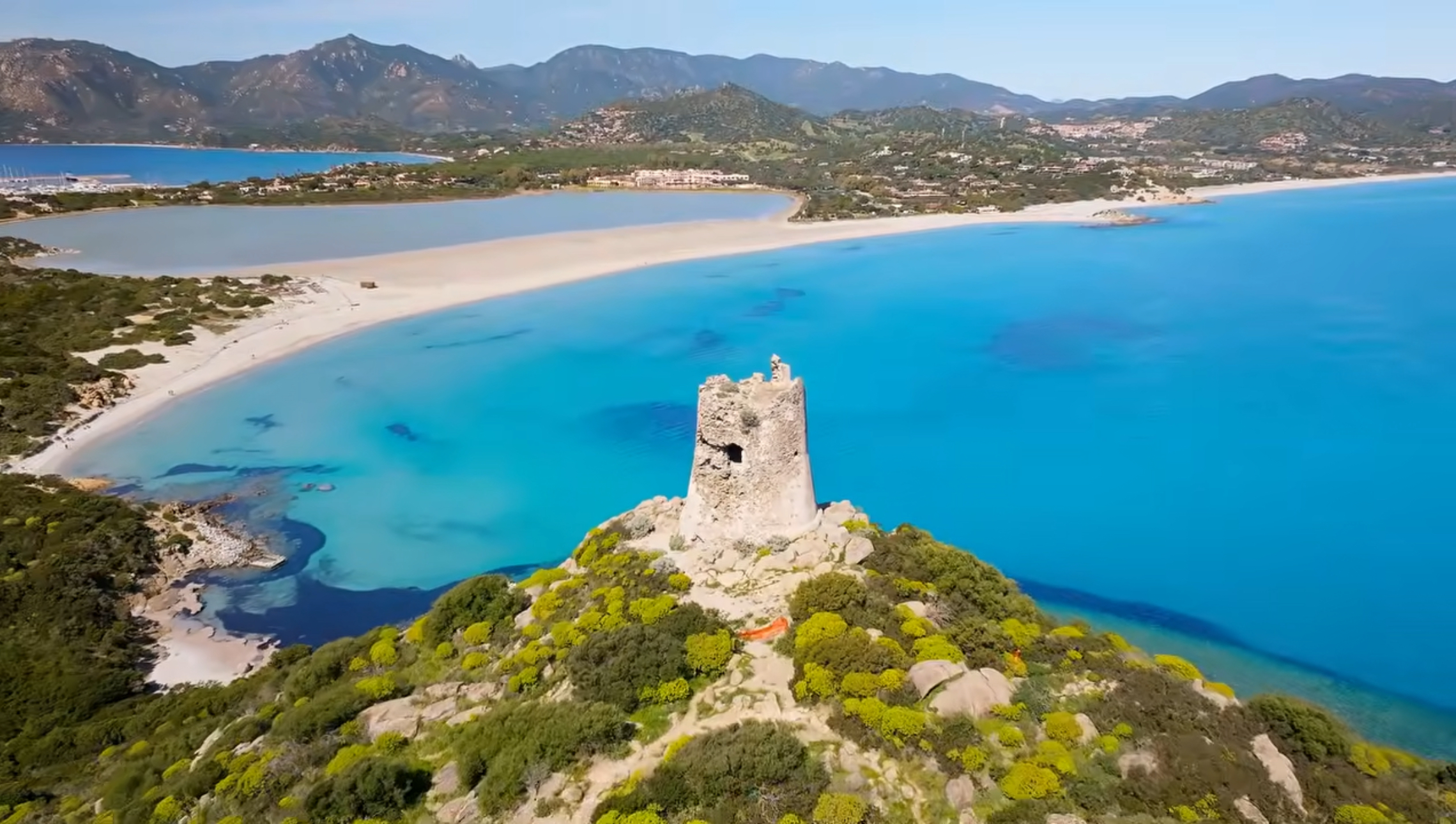
Villasimius is a genuine seaside resort town at the tip of the Capo Carbonara peninsula — busy and well-equipped in summer, considerably quieter in winter, with many tourism-focused businesses operating seasonally. Many travelers consider its beaches among the best in the region, though which beach feels “best” ultimately comes down to personal preference for scenery, wind exposure, and crowd tolerance.
- Best for: Beach-focused travelers who want a wide choice of distinct beaches within a short drive of a proper resort town
- Beach access: Simius beach is walkable from the town center; other well-known beaches — Punta Molentis, Porto Giunco, Campulongu, Cala Caterina — are spread along several kilometers of coast and are not walkable from town
- Restaurants and evenings: A good range for a town this size in high season, including waterfront aperitivo spots around the marina; far more limited outside roughly May to October
- Walkability: Fine within the town itself; not a base for exploring the wider coastline on foot
- Car needed: A car is strongly recommended for exploring multiple beaches. Public buses connect Villasimius with Cagliari, and in summer some local routes serve nearby beaches, but coverage is limited compared to what a car gives you here
- Airport convenience: Roughly 50–60 km and about an hour’s drive from Cagliari Elmas Airport via the SS125 or SS554, traffic-dependent
- Parking/seasonal considerations: No historic-center ZTL comparable to Cagliari’s; the practical constraint is beach parking filling up on summer mornings
Main tradeoff: Wide beach choice and proper resort amenities, but heavily seasonal and much easier to explore with a car.
[AFFILIATE CTA: Compare stays in Villasimius]
Costa Rei
Costa Rei is a recognized tourist center within the municipality of Muravera, in the Sarrabus area of southeastern Sardinia — geographically distinct from Villasimius, sitting roughly 24 km further along the coast. It’s built around one long, largely uninterrupted stretch of sandy beach running several kilometers, and it functions almost entirely as a summer destination.
- Best for: Families and travelers who want a long, easy sandy beach without needing to hop between coves
- Atmosphere: A relaxed, spread-out beach settlement rather than a dense town center — quiet and geared toward unhurried beach days
- Beach access: Excellent if your accommodation is close to the beach itself — much of the long shoreline is free public sand, with some sections offering seasonal beach-club facilities
- Restaurants and evenings: A modest but functional selection of beachfront kiosks, trattorias, and a central square with cafes; concentrated in the warmer months
- Walkability: Depends heavily on where you stay — a well-located property can put you within walking distance of the beach and a handful of restaurants, but Costa Rei is not a compact walkable town overall
- Car usefulness: Very high. Public transport is limited compared with Cagliari, although ARST Line 101 connects Cagliari, Villasimius, Costa Rei and San Vito. Check the current ARST timetable before relying on it. A car provides substantially more flexibility
- Airport convenience: Roughly 65 km from Cagliari Elmas Airport, with driving times commonly cited around 1 hour to 1 hour 15 minutes, traffic-dependent
- Parking/seasonal considerations: Parking arrangements vary by location and season, and municipal paid parking may operate in Costa Rei. Confirm the current rules from posted signs rather than assuming parking is free; the town operates on a clearly seasonal calendar, broadly active from spring through October, with far less open outside that window
Main tradeoff: One of the longest, most easygoing beaches in the region, but almost entirely car-dependent and firmly a warm-season destination.
[AFFILIATE CTA: Compare accommodation in Costa Rei]
Pula and Nora
Pula is a real working town with a pleasant central square and market, rather than a resort built purely for tourism — it tends to have more going on outside peak summer than Villasimius, Costa Rei, or Chia.
- Best for: Travelers who want beaches plus genuine archaeological interest, in a calmer, more year-round town
- Beach access: The Nora archaeological site sits right on a beach, and Santa Margherita di Pula’s coastline is a few kilometers away with a run of family-oriented beaches; none of this is walkable from Pula’s own center, but distances are short by car
- Restaurants and evenings: A pleasant central piazza with cafes and restaurants that don’t fully shut down off-season
- Walkability: Good within the town center itself
- Car needed: Effectively yes, to reach the beaches and the Nora site comfortably, though buses do run from Cagliari’s ARST station to Pula
- Airport convenience: Roughly 35–40 km, about 35–40 minutes’ drive from Cagliari Elmas Airport via the SS195, traffic-dependent
- Parking/seasonal considerations: No comparable ZTL system to Cagliari; parking near the Nora site and the main beaches is more a matter of arriving early in peak season than navigating restricted zones
Main tradeoff: A genuinely interesting cultural anchor and less seasonality than Villasimius or Chia, but the beaches and sights still require a car.
[AFFILIATE CTA: Browse stays near Pula and Nora]
Chia
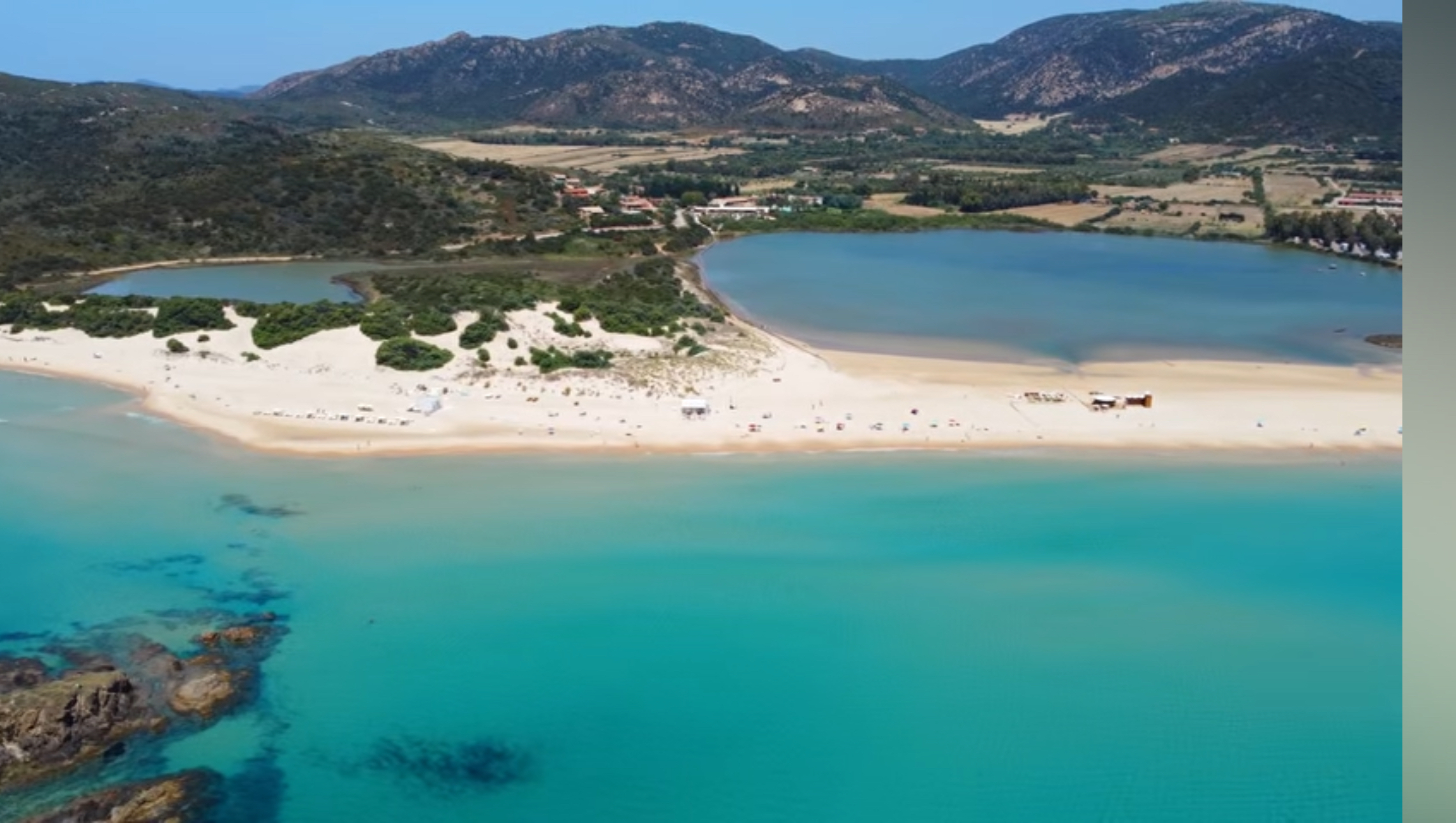
Chia is not a town in the conventional sense — it’s a coastal area within the municipality of Domus de Maria, built almost entirely around its beaches, dunes, and a lagoon that attracts flamingos. Many travelers rate its scenery among the most dramatic in the region, though beach suitability here varies significantly by individual beach, wind, and sea conditions on any given day.
- Best for: Travelers who want to build a trip around striking beach and dune scenery
- Beach access: Strong but car-dependent between sections. The main beaches — Su Giudeu, Sa Colonia, Campana, Cala Cipolla — sit along roughly 3–4 km of coast; some are directly reachable by car with adjacent parking, while others (Cala Cipolla in particular) require parking at the nearest lot and walking the rest of the way. The dunes themselves are protected and fenced, with designated access paths only
- Restaurants and evenings: A handful of beach restaurants and bars, concentrated in summer; genuinely quiet outside the main season
- Walkability: You can walk between several beach sections along the shore, but distances add up and the terrain can be tiring in midday heat — this isn’t the same as walkable town access
- Car needed: Yes, essentially required — the beaches are spread along a stretch of coast with no historic town center to base yourself in on foot
- Airport convenience: Around 60 km and roughly an hour’s drive from Cagliari Elmas Airport, traffic-dependent
- Parking/seasonal considerations: No ZTL; the main beach parking areas fill early on peak summer days, particularly at Su Giudeu and Sa Colonia. Conditions vary by beach and by wind — some coves are more sheltered than others, and a strong mistral can make exposed sections choppy and sandy, while suiting surfers and kitesurfers
Main tradeoff: Exceptional, widely admired scenery, but very seasonal, limited dining, and a car is close to non-negotiable.
[AFFILIATE CTA: Find accommodation near Chia]
Comparison Table
| Area | Best For | Car Needed | Beach Access | Typical Airport Transfer Time by Car/Taxi | Best Length of Stay |
|---|---|---|---|---|---|
| Castello | Atmosphere and views | No | Bus/taxi to Poetto | ~15–20 min (approx., traffic-dependent) | Short or long |
| Marina | First-timers, restaurants | No | Bus to Poetto | ~10–15 min (approx., traffic-dependent) | Short or long |
| Stampace | Central, calmer than Marina | No | Bus to Poetto | ~10–15 min (approx., traffic-dependent) | Short or long |
| Villanova | Local, quiet historic base | No | Bus to Poetto | ~15 min (approx., traffic-dependent) | Longer stays |
| Poetto | Beach without leaving the city | Helpful, not essential | Direct — on the beach | ~20–25 min (approx., traffic-dependent) | Any length |
| Villasimius | Beach variety, resort amenities | Strongly recommended | Drive between beaches | ~1 hour (approx., traffic-dependent) | A week or more |
| Costa Rei | Long easy beach, families | Yes | Direct at well-located stays | ~1–1h15 (approx., traffic-dependent) | A week or more |
| Pula / Nora | Beaches plus archaeology | Effectively yes | Short drive to beaches | ~35–40 min (approx., traffic-dependent) | 2–4 nights, or longer |
| Chia | Dramatic dune scenery | Yes | Drive/walk between sections | ~1 hour (approx., traffic-dependent) | 2–3 nights, or longer |
Best Choices by Priority
- Best without a car: Marina or Stampace, with Poetto reachable by city bus (check current CTM routes)
- Best for beaches: Villasimius, Costa Rei, and Chia are the three standout options — which suits you best depends on whether you want beach variety (Villasimius), one long easy stretch of sand (Costa Rei), or dramatic dune scenery (Chia)
- Best for families: Poetto (facilities, no long drives) or Costa Rei (long, gently shelving beach, though a car is required)
- Best for couples: Castello for atmosphere and views; Chia or Pula for a quieter, scenery-focused coastal stay
- Best for nightlife and restaurants: Marina in Cagliari for year-round variety; Villasimius in summer for a livelier coastal evening scene
- Best for day trips: Cagliari itself — its train, bus, and road connections make it the most practical hub for exploring the whole southern coast without committing to one beach town
A Realistic Three- or Four-Night Trip
For a short trip, there are two reasonable approaches, and neither is universally better — it comes down to what you’d rather trade off.
- Stay entirely in Cagliari: Base yourself in Marina or Stampace for the whole three or four nights, and visit Pula and Nora as a day trip (roughly 35–40 minutes each way). This keeps you in one comfortable, walkable base, avoids repacking, and still gets you a full day of beach and archaeology on the coast.
- Split between Cagliari and Pula: Spend the first half of your stay in the city, then relocate to Pula for the remainder. This gives you a genuine coastal change of pace and more relaxed time at the beach and the Nora site, at the cost of packing up and moving accommodation partway through a short trip.
If city evenings and museum time matter more to you than beach hours, staying put and day-tripping is usually the less disruptive option. If the beach and a slower pace are the priority even for a short visit, splitting the stay is worth the extra logistics.
A Longer Stay
With a week or more, the calculus changes. Renting a car and basing yourself in Villasimius, Costa Rei, or Chia for the bulk of the trip lets you actually work through their respective beaches without rushing, with day trips back into Cagliari (roughly an hour each way from Villasimius or Chia and around 1 hour to 1 hour 15 minutes from Costa Rei, depending on traffic) for city time, shopping, or a change of scenery. Alternatively, basing in Cagliari for the whole stay and day-tripping out to Villasimius, Costa Rei, Pula/Nora, and Chia in turn keeps you in one comfortable, walkable base while still covering the whole region — the tradeoff is more driving time overall and shorter windows at each beach.
Airport and Getting Around
Cagliari Elmas Airport sits close to the city — roughly 7–9 km from the historic center. Per Trenitalia’s current published information, the regional train between Elmas Airport and Cagliari Centrale takes less than 10 minutes, with service approximately every 20 minutes, operating daily from around 05:10 to 23:07 — always confirm your specific departure time before relying on it, since schedules can be adjusted. A taxi covers the same distance in roughly 15–20 minutes depending on traffic.
From the airport, driving times to the southern coastal bases are approximately: Pula 35–40 minutes, Chia and Villasimius each around an hour, and Costa Rei 1 hour to 1 hour 15 minutes — all traffic-dependent and commonly longer in peak summer, particularly on Friday and Saturday changeover days. If you’re staying in central Cagliari and don’t plan to leave the city, you likely don’t need a rental car at all — but if the southern coast is part of your plan, arrange a car from the airport rather than trying to add one partway through the trip.
Seasonal Availability and Peak-Summer Booking
Cagliari itself operates close to year-round — hotels, restaurants, and public transport keep running through the winter, even if the beach atmosphere at Poetto quiets down considerably. The southern coastal towns are a different story: Villasimius, Costa Rei, and Chia all see a significant share of hotels, restaurants, and even some bus routes scale back or close outside roughly April/May through October, with the quietest stretch in winter. Pula holds onto more year-round activity than the others, given its status as a real town rather than a purely seasonal resort.
In July and August, book well in advance for any of the coastal towns — availability tightens significantly, and popular beach parking areas (Su Giudeu and Sa Colonia in Chia, the main lots at Villasimius’s best beaches, Poetto’s roadside spaces) fill by mid-morning on sunny days. Arriving before 9am is a genuinely useful habit in peak season, not just for parking but for beach space generally.
Questions to Ask Before Reserving
- Does the property fall inside or near one of Cagliari’s ZTLs, and if so, how does parking or guest vehicle access actually work? Ask for written instructions rather than assuming.
- How far is the property from the nearest beach, and is that distance walkable or does it require a bus, taxi, or your own car?
- If you’re not renting a car, what specific bus lines or train connections does the host recommend, and do they run outside peak summer?
- Are stairs or steep streets involved in reaching the property (a real factor in Castello and upper Stampace)?
- If staying on the southern coast outside peak season, which nearby restaurants and services are confirmed to stay open?
- Is parking included, and if the property is near a beach, is that parking free or does it require an additional daily fee in summer?
Final Base-Selection Checklist
- Decide first: city trip, beach trip, or a split between the two.
- If choosing Cagliari, decide how much you value nightlife and restaurant density (Marina) versus quiet atmosphere (Castello or Villanova) versus a practical middle ground (Stampace).
- If you want beach access without leaving the city, prioritize Poetto or a central district with an easy bus connection to it — and check current CTM routes before you travel.
- If choosing the southern coast, confirm you’re comfortable with a car being close to mandatory, and decide whether beach variety (Villasimius), one long easy beach (Costa Rei), archaeology plus beaches (Pula), or dramatic scenery (Chia) matters most.
- Match your trip length to the base — short stays suit Cagliari or Pula better; longer stays suit Villasimius, Costa Rei, or Chia better.
- Check the season — confirm what’s actually open if traveling outside roughly April/May–October on the southern coast.
- Get written arrival, access, and parking instructions from your accommodation, especially anywhere near a Cagliari ZTL.
- Review the southern Sardinia itinerary to see how your chosen base fits into a wider trip.
For more on what to actually do once you’ve chosen a base, see our guide to things to do in Cagliari, and start planning day trips with the Cagliari & South destination hub.