
Cala Goloritzè is one of the Gulf of Orosei’s most tightly restricted major coves: boats cannot land, and reaching the beach requires a reserved hike. This guide is a practical walkthrough of how to visit legally and safely: the current reservation system, the hike itself, and what to expect once you’re there. For the wider region, see our Gulf of Orosei guide and Baunei and Golgo Plateau guide.
What Cala Goloritzè Is Actually Like
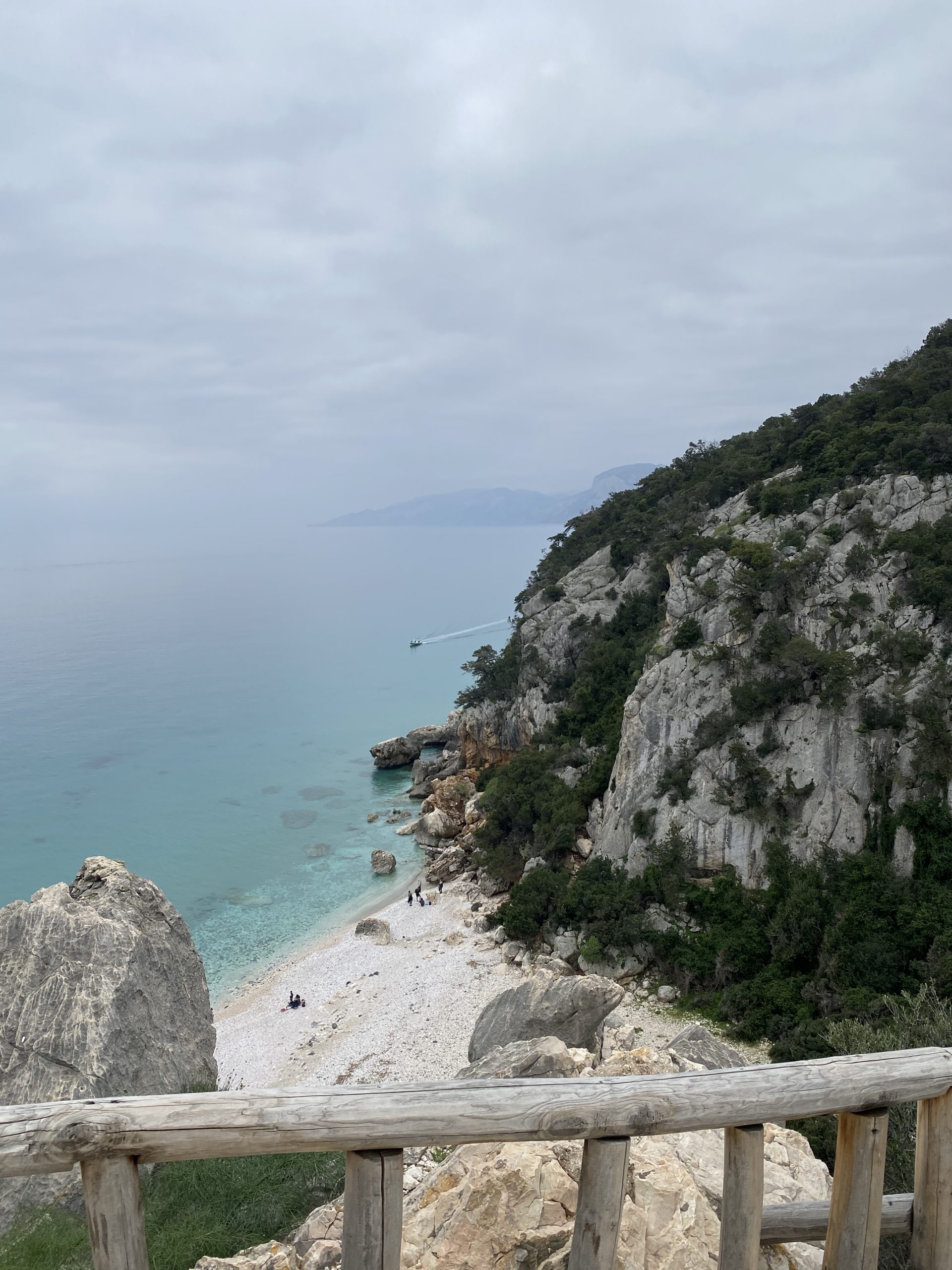
Cala Goloritzè is a small cove on the Baunei coast, dominated by a limestone pinnacle and a natural rock arch rising directly from the water. It’s one of the coast’s most recognizable coves, and unlike most of the Gulf of Orosei’s famous coves, it can only be reached on foot. There’s no casual version of this visit — getting here takes a booked permit, a genuine hike, and a return climb that’s harder than most visitors expect.
[Image placeholder: Cala Goloritzè cove from the trail’s final descent, showing the limestone pinnacle and natural arch]
Location on the Baunei Coast
Cala Goloritzè sits within the municipality of Baunei, on the southern stretch of the Gulf of Orosei often referred to as the Baunei coast. The trailhead is on the Golgo plateau above Baunei village, roughly 8 kilometers from town by road — the same plateau covered in our Baunei and Golgo Plateau guide.
Natural Monument Status
Cala Goloritzè has been protected as a regional Natural Monument since 1993 and gained further recognition as a national monument in 1995. That designation is the underlying reason for nearly everything else in this guide — the reservation system, the ban on boat landings, and the strict expectations around waste and behavior all stem from an effort to protect a landscape that would otherwise be worn down by the volume of visitors it attracts.
The Pinnacle, the Arch, and the Cliffs
The cove’s defining feature is the Aguglia di Punta Caroddi, a limestone pinnacle roughly 143 meters tall rising straight out of the water beside a natural rock arch. It’s a genuine climbing objective as well as a photographic one — the pinnacle was first climbed in January 1981 by Alessandro Gogna and Maurizio “Manolo” Zanolla. For most visitors, though, the pinnacle and arch are simply the backdrop: a dramatic, immediately recognizable landmark framing a beach that’s small by comparison.
Beach Composition and Water Conditions
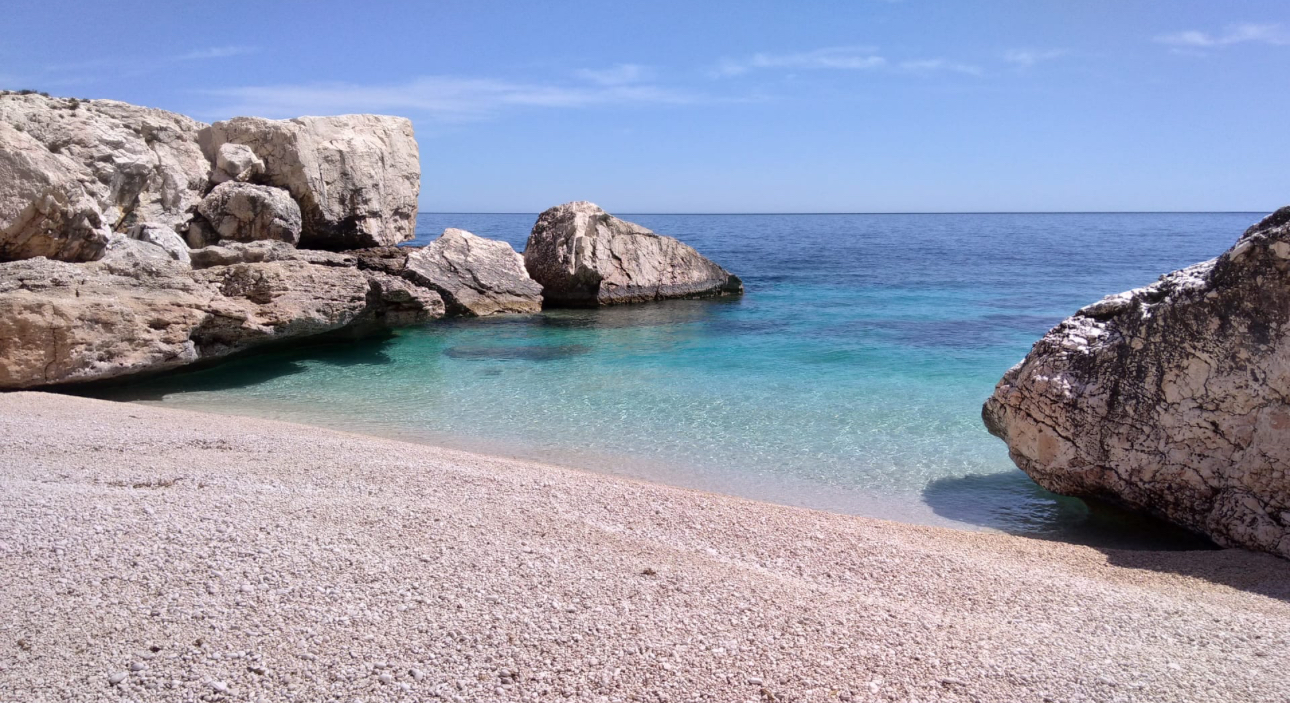
The beach itself is small and made up of pale, rounded pebbles rather than sand, with coarse sand and stones beneath the water near shore. Depth and conditions vary, so don’t assume a uniformly shallow entry. The water’s vivid turquoise color is often attributed partly to freshwater springs emerging from the seabed nearby. It’s a genuinely beautiful swimming spot, but a small one — with the visitor cap in place, it can still feel crowded at its busiest hours, covered further below.
[Image placeholder: close-up of Cala Goloritzè’s pebble beach and turquoise water, with the Aguglia pinnacle in the background]
Why Boats Cannot Land
Landing by boat at Cala Goloritzè is prohibited, a restriction tied to the cove’s protected status. Boat excursions from Cala Gonone, Santa Maria Navarrese, or Arbatax can bring you close enough to see and photograph the pinnacle and arch, but they cannot put passengers ashore here the way they can at Cala Luna or Cala Mariolu.
Offshore Restrictions and Whether You Can Swim Ashore
Boats are required to keep a protected exclusion distance from the shore here, though published figures for the exact distance vary between sources and we can’t confirm a single current number with confidence — treat any specific meter figure you see elsewhere with some caution and don’t rely on it for planning. What matters practically is this: an offshore view from a boat excursion is not the same thing as legal beach access. We can’t confirm whether swimming ashore from a boat is currently permitted or prohibited, and given how actively this coastline is monitored, this isn’t something to test on your own judgment. If reaching the actual beach is your goal, the hike with a valid reservation is the confirmed legal route — boat excursions here are for the view, not for landing.
See Cala Goloritzè from the Water
If you don’t want to make the hike, a boat excursion can still let you see Cala Goloritzè from offshore while exploring more of the Baunei coast. This longer dinghy tour also includes Cala Mariolu, Cala Biriala and Grotta del Fico. Remember that boats cannot land at Cala Goloritzè, so this should not be confused with access to the beach itself. Check the current itinerary, stops and sea conditions before booking.
Affiliate disclosure: If you book through this link, SardiniaSardegna may earn a commission at no additional cost to you.
Hiking from Su Porteddu
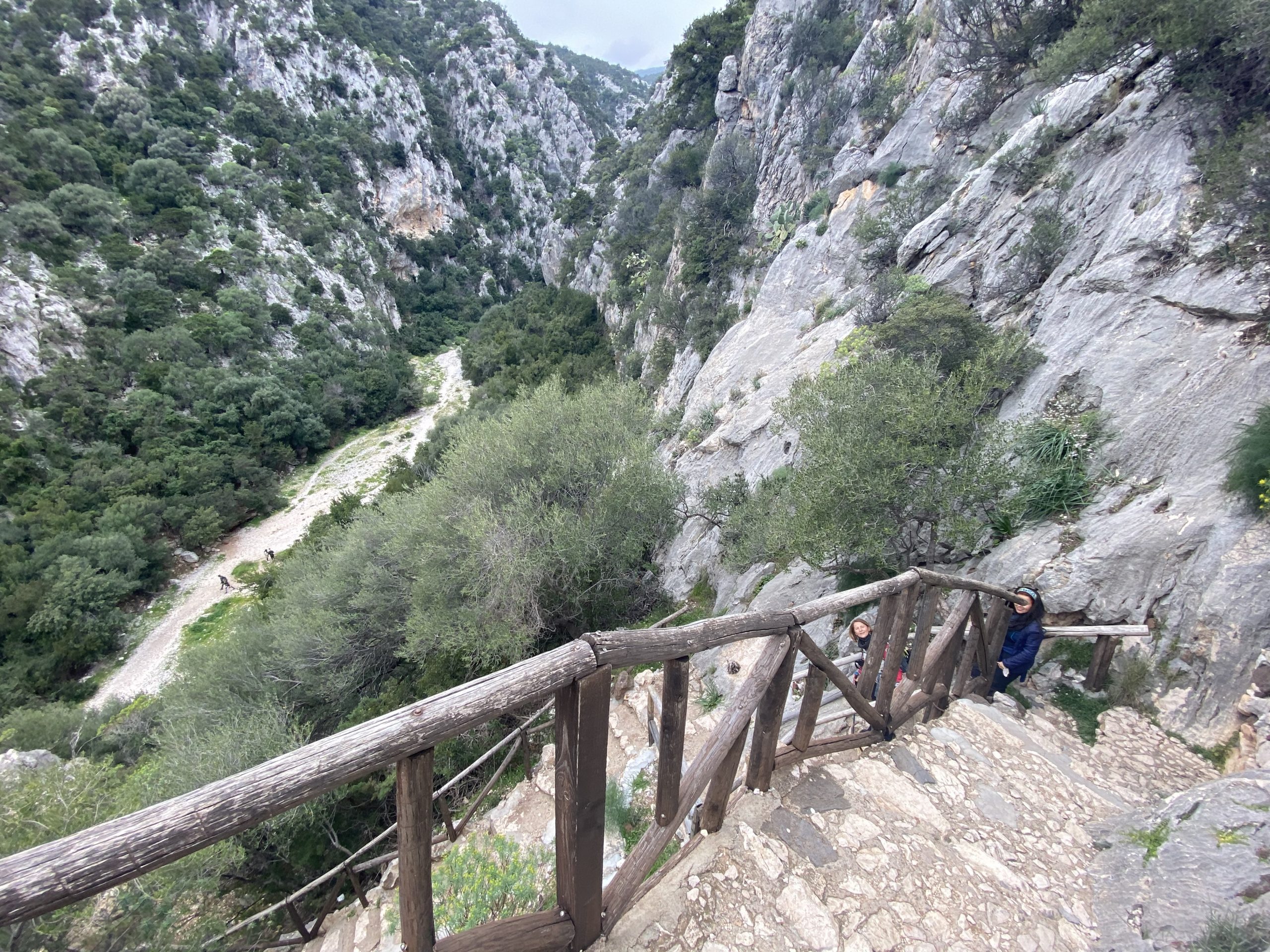
The only way to legally set foot on Cala Goloritzè’s beach is to hike in from Su Porteddu, a car park and trailhead on the Golgo plateau, following the Bacu Goloritzè canyon down through holm oak forest and past old stone sheepfolds. The trailhead also has a small restaurant, useful for a meal before or after the hike.
Trail Distance and Elevation Change
Current sources consistently describe the trail as roughly 3.5 to 3.6 kilometers each way, with an elevation change of approximately 500 meters, though individual figures vary somewhat by source (some report closer to 470 meters, others over 500). Treat these as approximate rather than exact, and don’t be surprised if your GPS tracker shows a slightly different number.
Descent and Return Times
The descent typically takes about 1 hour 30 minutes for a reasonably fit hiker moving at a normal pace. The return climb commonly takes around 2 hours, sometimes longer if you’re stopping frequently or hiking in the heat of the afternoon.
Why the Return Climb Is Harder
It’s easy to underestimate this hike because the outbound leg is downhill and feels manageable. The return is a different experience: the same distance and elevation change, climbed rather than descended, typically in the heat of the afternoon after a day of sun and swimming has already used up some of your energy. This is consistently the part hikers say they underestimated, and it’s worth planning your timing and water supply around the climb, not the descent.
Difficulty, Trail Surface, and Footwear
The trail is commonly described as moderate rather than technical, alternating between stony and earthy surfaces with some steep, uneven sections. It is a hiking route rather than a technical climbing route, but some sections require stability, sure footing, and free hands. The route includes some wooded sections but is highly exposed to the sun overall, particularly during the return climb. It is not a hike for sandals or worn-out sneakers; closed-toe shoes with real grip, ideally hiking shoes or boots, matter here both for comfort and for basic safety on the descent’s loose surfaces.
Water and Food Requirements
There’s no drinking water source anywhere on the trail or at the beach. Official guidance recommends at least 2 liters of water per person as a minimum; more may be appropriate in summer heat, particularly for the return climb. Bring food as well — there’s nothing to buy once you leave the trailhead restaurant at Su Porteddu.
The Current Reservation System
Access to Cala Goloritzè is managed through the official Heart of Sardinia booking platform, with a QR code generated at booking that must be saved and available for checks during your visit. As of 2026, the system lists a maximum capacity of 250 people present at the site at one time, an entrance fee of €7 per person, and free entry for children up to and including age 5, and for registered residents of the Municipality of Baunei. Standard bookings open three days before your selected date. Confirm the current Su Porteddu parking charge and payment arrangement separately before arrival; do not assume it is included in the €7 ticket.
The main booking slot generally spans the morning through mid-afternoon (commonly cited as roughly 7:30 to 17:00 for combined trail and beach time), with a separate afternoon-only slot — cited around 12:00 to 17:00 — that appears in the booking system only when it’s currently active; don’t assume it will be available for your date, and check the current options directly when you book. When the afternoon slot is active, trail entry is currently required between 12:00 and 13:30. Some current sources also describe a hospitality code that can unlock an additional booking-window day for guests staying at qualifying Baunei accommodation, again only when active in the system — ask your accommodation directly whether they participate rather than assuming this applies.
Tickets are currently non-refundable once purchased. None of these figures should be treated as permanent — capacity, fees, exact time slots, and the hospitality-code system have all been subject to change as this booking system has developed, and the only reliable way to confirm current terms is to check the official Heart of Sardinia Cala Goloritzè booking page shortly before you travel.
Why You Must Confirm Every Current Rule Before Traveling
This system has changed multiple times since it was introduced, and it continues to be adjusted season to season. Fees, exact time windows, capacity, and the hospitality-code process are all things that could look different by the time you travel, even if you’re reading this guide close to your trip. Confirm current terms directly through the official booking platform rather than relying on any figure printed here or elsewhere.
If Reservations Sell Out
In peak season, popular dates may sell out quickly once the three-day booking window opens. If your dates are fixed, book as early as the system allows once your target date becomes available, and have a backup plan — an alternate day, or a different cove entirely — in case your first choice sells out.
Should Same-Day Access Ever Be Assumed?
Never assume same-day access will be available. Check the official platform, and do not travel to Su Porteddu without a confirmed reservation and QR code.
Dogs and Beach Restrictions
Under the current 2026 rules, dogs may accompany hikers on the trail but cannot enter Cala Goloritzè beach. Anyone hiking with a dog must therefore turn back before beach access or make another appropriate arrangement. Verify this rule again before traveling.
Suitability for Children, Older Travelers, and Limited Mobility
This hike is a poor fit for young children, older travelers with limited stamina, or anyone with mobility limitations. There is no alternative access — no boat option, no shorter route — so if the hike itself isn’t realistic for your group, this cove isn’t reachable at all for you. Older children who are already comfortable on uneven terrain for a few hours can generally manage it, especially without rushing, but this isn’t the place to test a first serious hike.
Swimming and Snorkeling Safety
The cove offers clear water for swimming and snorkeling, but depth and conditions vary along the shoreline and can change with wind and swell. Lifeguard presence should not be assumed — use ordinary caution, particularly with children, and don’t assume calm water simply because the cove looks sheltered from the beach.
Seasonal Facilities: What Not to Rely On
There are no bars, umbrella rentals, or toilets at the beach itself — this is a genuinely wild cove, protected in part because it hasn’t been developed. The restaurant at Su Porteddu, at the trailhead, is the only nearby facility, and even that should be confirmed for current hours rather than assumed open. Bring everything you need for the day with you.
Crowds Despite the Capacity Limit
A 250-person cap sounds modest, but on a beach this small, it can still feel busy — particularly in the late morning and early afternoon, when most hikers who started at a similar time converge on the beach together. The capacity system limits how bad crowding can get; it doesn’t guarantee a quiet visit.
Best Realistic Start Time
Starting as early as your booked slot allows is the most effective way to beat both the crowds and the worst of the afternoon heat on the climb back. An early morning start also gives you the most buffer if the return climb takes longer than expected.
How Long the Complete Outing Requires
Allow approximately 3½ hours of walking based on official average times, plus breaks and additional time at the beach. Don’t plan anything else demanding for the same day.
Cala Goloritzè Compared with Cala Mariolu
Cala Mariolu, covered in our Cala Mariolu guide, is the more boat-accessible of the two, with a regulated sea-landing system and its own separate, considerably rougher expert-level land route as an alternative. Cala Goloritzè is the more tightly restricted of the two: hike-only, with no boat landing option at all, and a marked, well-established trail. If boat access matters to you, Cala Mariolu is the realistic choice; if you specifically want the hike-only experience and don’t mind the reservation process, Cala Goloritzè is the better fit.
Prefer a Shorter Boat Experience?
If you’d rather experience this stretch of the Baunei coast by boat, this RIB excursion from Arbatax combines Cala Mariolu with an offshore view of Cala Goloritzè. It can be a useful alternative for travelers who don’t want to undertake the Goloritzè hike. Remember that the excursion does not provide beach access at Cala Goloritzè. Check the current itinerary, stops and sea conditions before booking.
Affiliate disclosure: If you book through this link, SardiniaSardegna may earn a commission at no additional cost to you.
Cala Goloritzè Compared with Cala Luna
Cala Luna, covered in our Cala Luna guide, is reachable by both a moderate hike and a short boat ride, with no dedicated hiking-permit system the way Cala Goloritzè has. Cala Goloritzè’s trail is shorter in distance but substantially steeper, with much greater elevation change and a harder return climb than the Cala Fuili route to Cala Luna. If you want an easier hike-or-boat choice, Cala Luna is the more flexible option; if you specifically want Cala Goloritzè’s dramatic pinnacle-and-arch scenery, there’s no substitute.
Responsible Tourism and Leave-No-Trace Behavior
Cala Goloritzè’s protected status exists precisely because of how easily a place this small and this popular can be degraded. Pack out everything you bring in, including food waste — there are no bins on the trail or at the beach. Stay on the marked trail rather than cutting across the terrain, both for erosion reasons and your own footing. Respect the reservation system and any staff instructions on-site; this cove’s continued accessibility depends on visitors treating the rules as more than a formality.
Who Should Choose This Hike — and Who Should Choose Another Cove
Cala Goloritzè suits fit, well-prepared hikers who specifically want its landmark scenery and don’t mind planning a full day and a reservation around it. It’s a poor fit for anyone hoping for a casual beach day or a hike suitable for young children or limited mobility. Travelers wanting an easier hiking option may prefer Cala Luna; those wanting boat access to a dramatic Baunei cove may prefer Cala Mariolu. For the wider region this cove sits within, see our East Coast & Ogliastra destination page and our guide to Santa Maria Navarrese, the closest coastal town for those approaching from the south.