
Santa Maria Navarrese is where Baunei meets the sea — a small marina village nine kilometers from the mountain village covered in our Baunei and Golgo Plateau guide. This guide treats it as what most travelers actually need: a place to stay, eat, and launch a trip from. For the boat excursions, hikes, and beaches themselves, see our companion guides linked throughout.
What Santa Maria Navarrese Is Actually Like
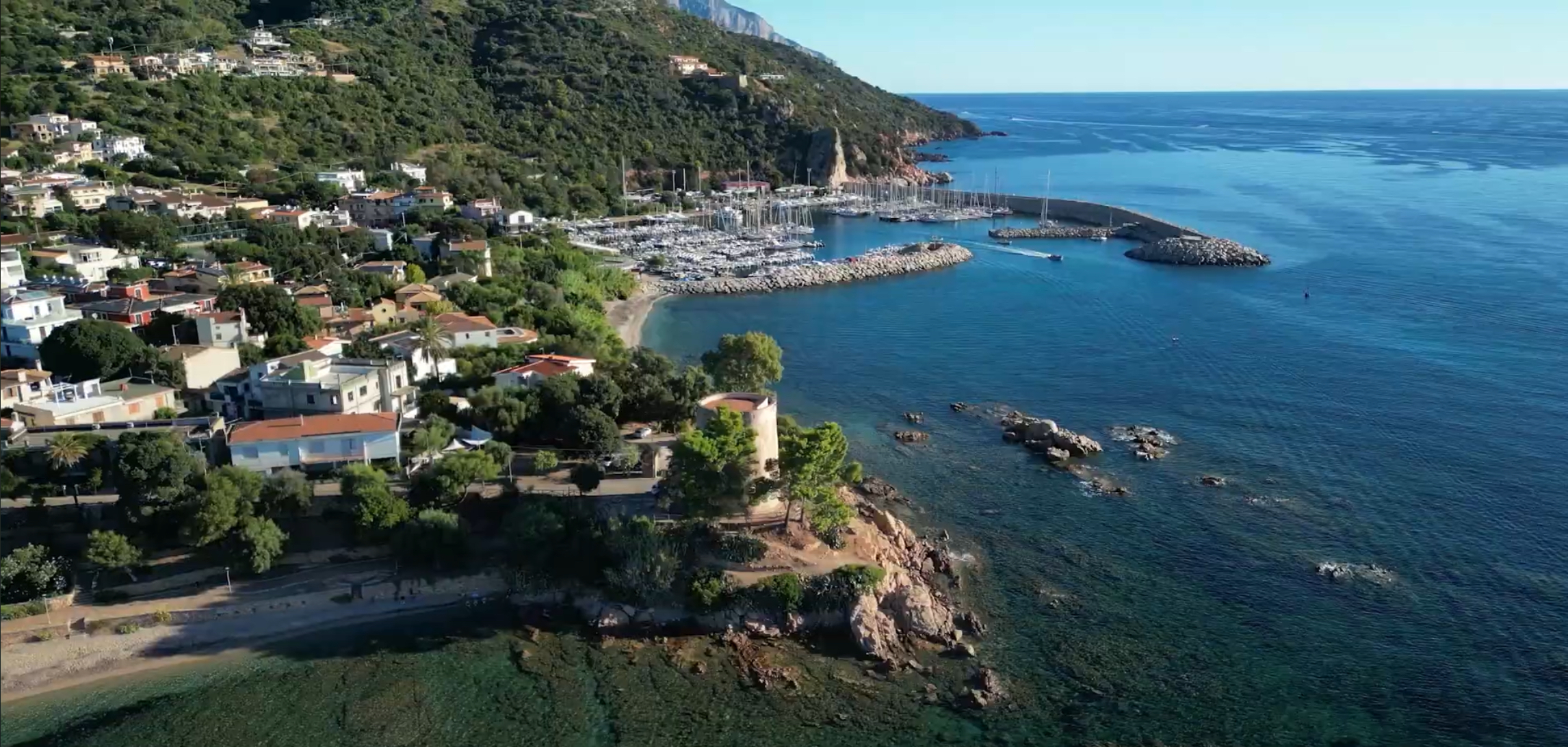
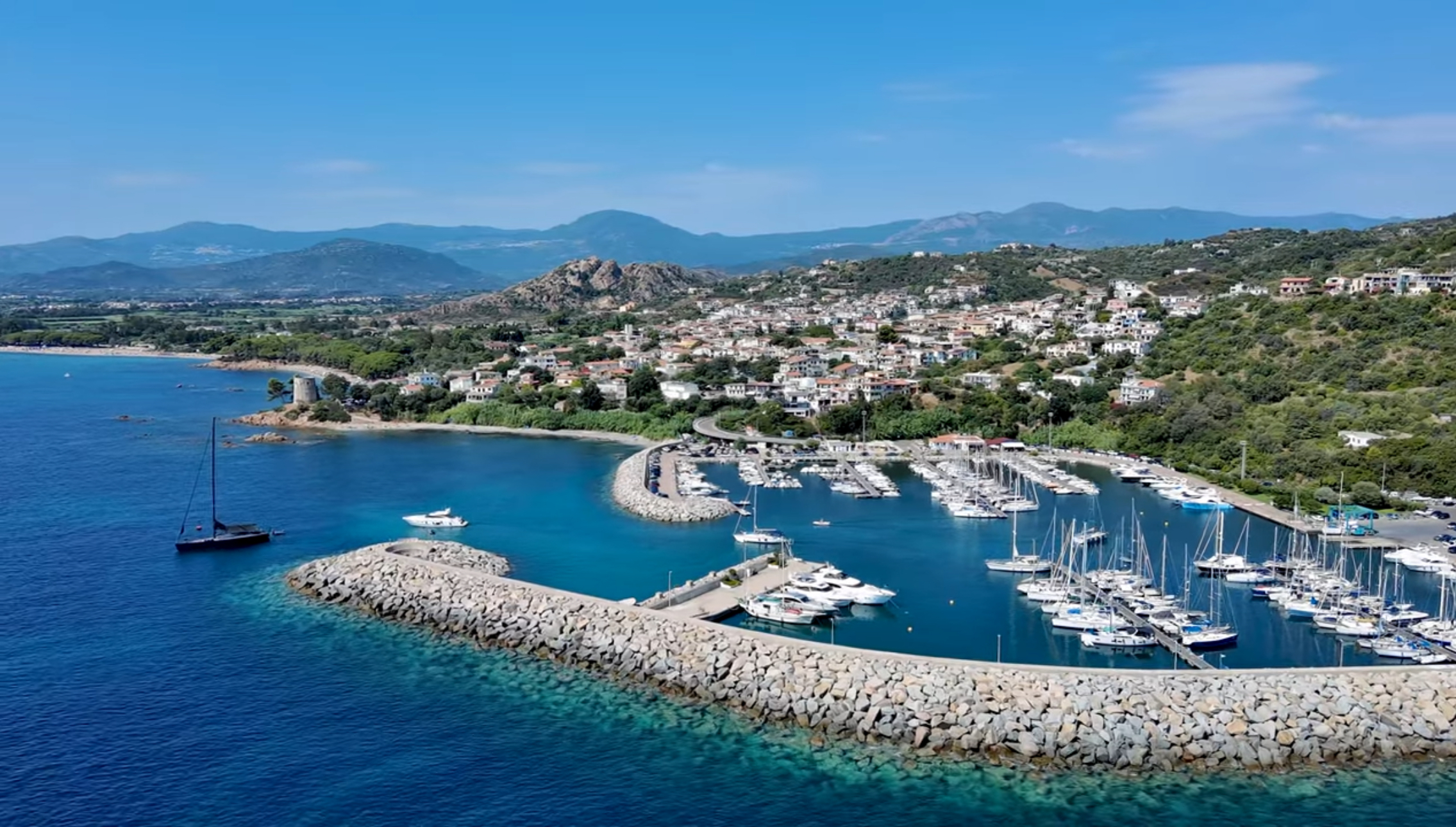
Santa Maria Navarrese is a compact, low-key coastal town built around a small marina — a promenade, a scattering of bars and restaurants, sand-and-pebble beaches on either side of an old watchtower, and a tourist economy that stays unhurried even in peak season. It isn’t a nightlife destination and it isn’t trying to be one. What it offers instead is easy beach access, a genuine departure point for the Gulf of Orosei, and a walkable center small enough to get your bearings in an afternoon.
Its Relationship to Baunei
Administratively, Santa Maria Navarrese is a frazione — a subdivision — of the municipality of Baunei, not a separate town. In practice, though, it functions as Baunei’s distinct coastal counterpart: a different landscape, economy, and daily rhythm from the pastoral mountain village nine kilometers inland. Most visitors experience the two as separate destinations, and this guide treats them that way, pointing back to our Baunei and Golgo Plateau guide for the inland side of the same municipality.
Who This Town Suits
Santa Maria Navarrese suits travelers who want beach access and boat excursions as their daily default, in a smaller and quieter setting than the larger resort towns farther north. It works well for couples, families, and older or less adventurous travelers who still want proximity to serious hiking and boat trips without those activities dominating every day. It’s a weaker fit for anyone specifically prioritizing nightlife or a large selection of restaurants and shops.
The Town Beach and Nearby Beaches
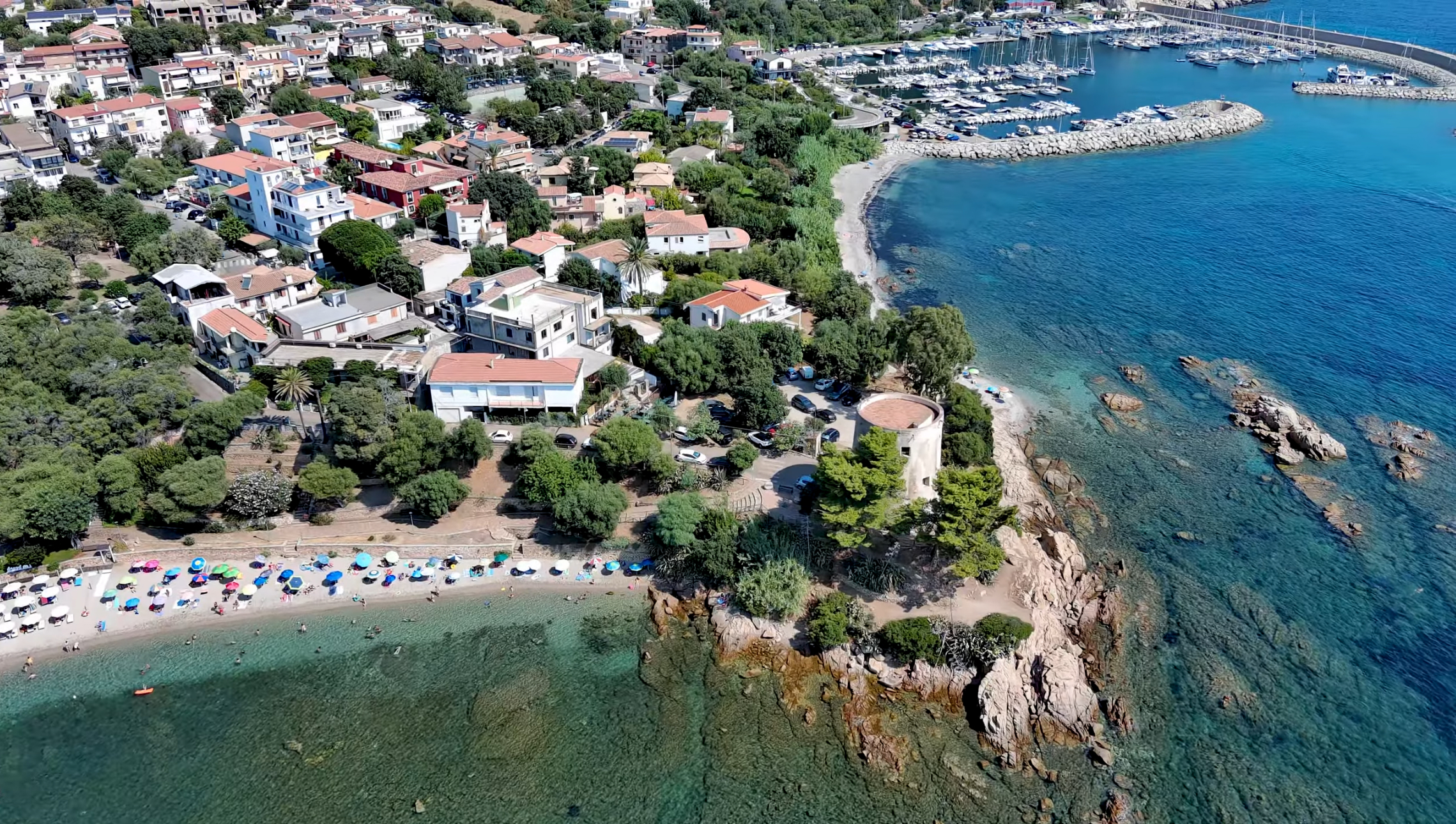
The town’s beaches sit on either side of the old Spanish watchtower. The Central Beach runs from beneath the tower toward a set of distinctive rock formations, backed in part by a shaded pine forest. On the other side is Spiaggia di San Giovanni, running toward the marina. Both are a mix of sand and pebble rather than fine sand throughout — worth knowing in advance. Both are easily walkable from most accommodation in town, without needing a car for an ordinary beach day.
The Marina and Boat Excursions Along the Baunei Coast
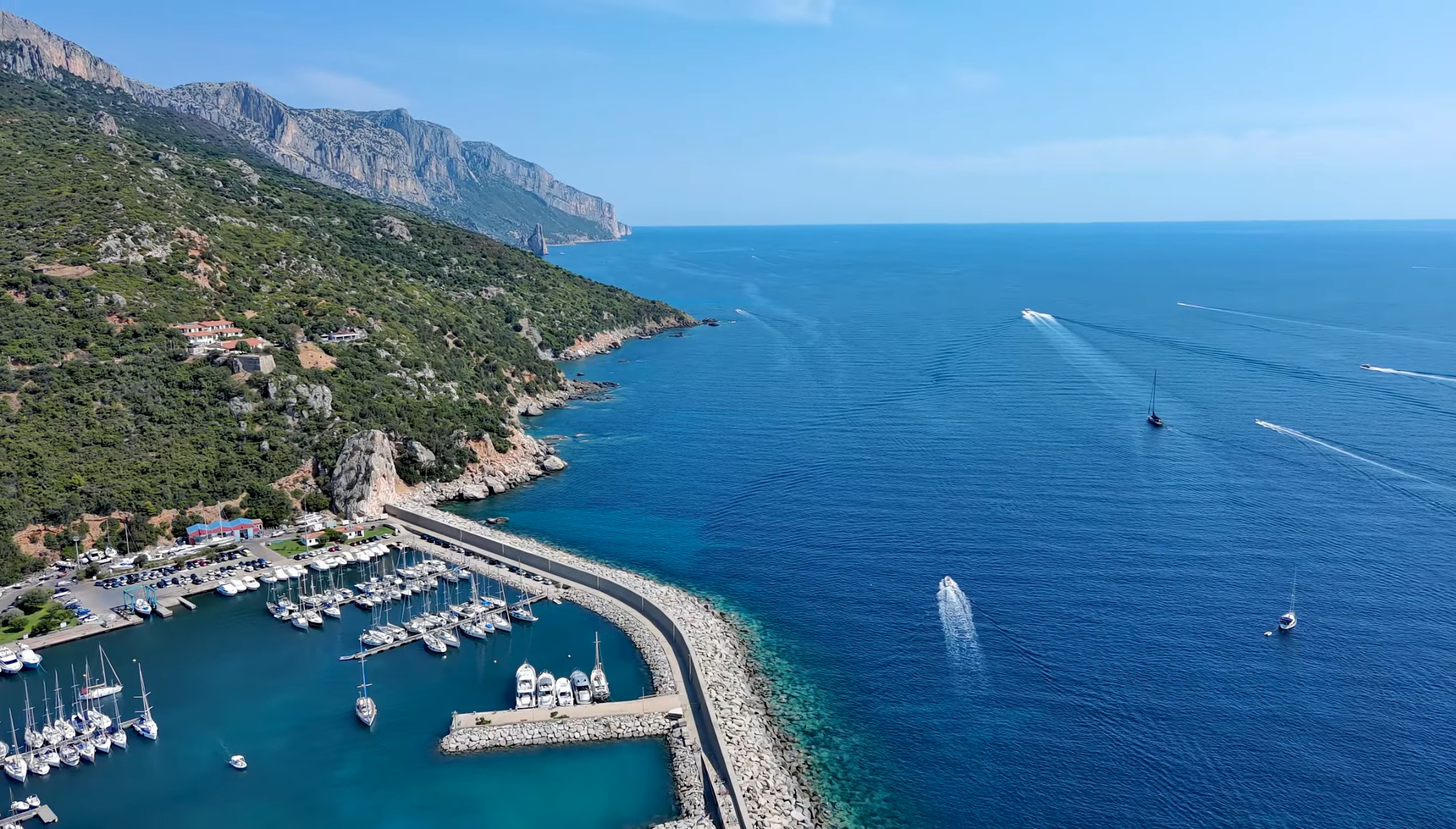
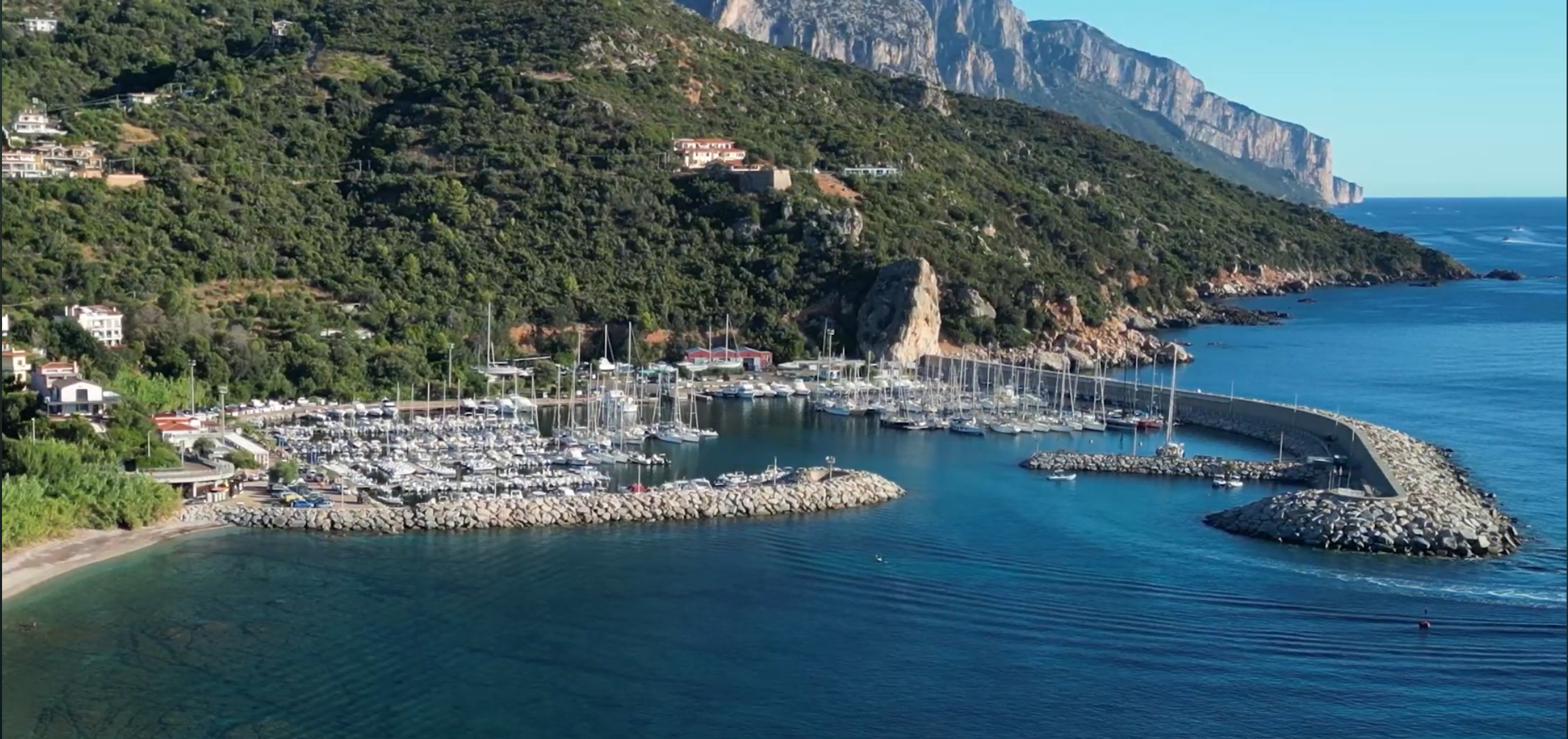
Santa Maria Navarrese’s marina is one of the main southern departure points for boat excursions along the Baunei coast and into the Gulf of Orosei, alongside Arbatax farther south and Cala Gonone to the north. Several operators run trips in season, typically passing Pedra Longa and the Grotta dei Colombi.
Depending on the operator, booking arrangements, access regulations, and sea conditions, itineraries may include Cala Goloritzè, Cala Mariolu, Cala Biriala, Cala dei Gabbiani, or Cala Sisine. No single stop or combination should be assumed in advance. Full-day and shorter excursions may both be available depending on the operator and season. Confirm the current itinerary, time ashore, departure point, and cancellation policy before booking.
The following link is an affiliate link. If you reserve an excursion through it, SardiniaSardegna may earn a commission at no additional cost to you.
For more help planning the wider coastline, see our Gulf of Orosei guide. Individual access details are covered in our guides to Cala Mariolu, Cala Biriala, Cala Sisine, and Cala Goloritzè.
Which Coves You Can Reach From Here
Departing from Santa Maria Navarrese rather than Cala Gonone changes which coves are the natural focus of a day trip. Cala Goloritzè and Cala Mariolu sit closer to this southern end of the coast, making them typical centerpieces of excursions from here, often combined with Pedra Longa on the way out or back.
Cala Luna, farther north, is reachable from Santa Maria Navarrese but involves a longer run than it would from Cala Gonone. If Cala Luna specifically is your priority, Cala Gonone is the more efficient base. If Cala Mariolu, Cala Goloritzè, Grotta del Fico, and the southern Baunei coves matter most, Santa Maria Navarrese is particularly well positioned.
The Church of Santa Maria
The small Romanesque church of Santa Maria di Navarra, dating to the 11th century, sits a short walk from the main beach. Local legend credits its founding to a Spanish princess from Navarre, said to have survived a shipwreck in the bay and built the church in gratitude — the origin, by tradition, of the town’s name. It’s architecturally modest, but it’s the historical and emotional anchor of the town center, standing in a square shaded by the ancient olive trees described below.
The Spanish Tower
Built around 1591 as part of Sardinia’s coastal watchtower network against pirate raids, the Torre di Santa Maria Navarrese stands on the small promontory dividing the town’s two main beaches. It maintained direct visual contact with the tower at Arbatax farther south, forming part of a coordinated warning system across the gulf, and remained an active lookout post well into the 19th century. It’s the town’s most recognizable landmark and a natural point of reference for orienting yourself between the two beaches.
The Ancient Olive Tree
Beside the church stands a striking wild olive tree, part of a wider grove the Region of Sardinia declared a Natural Monument in 1994. Botanists describe the largest specimen as extremely old, with a trunk exceeding eight meters in circumference. Precise ages for trees like this are difficult to establish scientifically, so treat figures suggesting a specific age — a thousand years or more — as an informed estimate and local tradition rather than verified fact.
What’s well documented is the scale, the protected status, and the rarity of finding a concentration of olive trees this old, this close to the sea, anywhere else in Sardinia.
The Waterfront in the Evening
Evenings in Santa Maria Navarrese center on the promenade and marina — a slow walk past moored boats, a drink or dinner overlooking the water, and a noticeably quieter pace once the day’s boat excursions have returned. It isn’t a town built for late nights; it’s built for the kind of evening where the view and the walk are the main event.
Restaurants and Local Food
Santa Maria Navarrese has a reasonable concentration of restaurants and bars for its size, mostly clustered around the marina and promenade and generally serving Sardinian coastal cuisine. Rather than naming specific businesses — hours, ownership, and seasonal opening patterns can change — check recent listings and ask locally once you arrive.
Where to Stay
Accommodation in Santa Maria Navarrese runs from small family-operated hotels and guesthouses to apartment rentals, generally modest in scale and clustered close to the marina and beaches. There isn’t a large luxury-resort presence here — this is a base built around access to the coast, not a destination organized around a hotel itself.
Staying close to the marina is particularly convenient if boat excursions are your priority, while accommodation around the central beach and church puts the historic center and both town beaches within easy walking distance. The town is compact enough that most central properties remain reasonably close to the waterfront, but check the exact location and gradient before booking if mobility or carrying luggage is a concern. Book well ahead for July and August, when the town’s limited accommodation supply fills alongside its boat excursions.
The following link is an affiliate link. If you reserve accommodation through it, SardiniaSardegna may earn a commission at no additional cost to you.
Santa Maria Navarrese Compared With Cala Gonone
Cala Gonone, covered in our Gulf of Orosei guide, is the larger and more central of the two bases. It’s the more efficient departure point for Cala Luna and the Bue Marino cave, with a bigger selection of restaurants and shops.
Santa Maria Navarrese is smaller and quieter, with a shorter run to Cala Goloritzè and Cala Mariolu and easier access to Pedra Longa. Neither is objectively better — the choice comes down to which coves and which pace of town you want as your daily default.
Santa Maria Navarrese Compared With Staying in Baunei Village
This comparison is covered in more depth in our Baunei and Golgo Plateau guide, but in short: Santa Maria Navarrese gives you direct beach and marina access as your default, with Golgo and Baunei village as an occasional inland excursion. Staying in Baunei itself flips that arrangement — easy access to the plateau and the Cala Goloritzè trailhead, with the coast a drive away.
Travelers prioritizing beach time and boat excursions are generally better served by Santa Maria Navarrese; those prioritizing the plateau and hiking may prefer Baunei village.
Using It as a Base for Golgo and Cala Goloritzè
Santa Maria Navarrese works well as a base for the Cala Goloritzè hike and the wider Golgo plateau, both reached through Baunei village a short drive inland. Full details on the hike — including trail conditions, reservations, timing, and what the return climb involves — are covered in our Cala Goloritzè hiking guide. Budget for the drive up to the trailhead as part of your day rather than treating Golgo as reachable on foot from town.
Access to Pedra Longa and Nearby Excursions
Pedra Longa, a striking limestone sea stack a few kilometers north of town, has been a protected Natural Monument since 1993. According to the official Baunei tourism authority, it’s reachable by car via a signed turnoff from the Orientale Sarda road, followed by a scenic descent to a small square near the base of the formation.
It’s also reachable on foot from town — a roughly two-hour walk via a footpath near the Bellavista Hostel, above the promontory overlooking the marina — or as a stop on many boat excursions departing from Santa Maria Navarrese. Whichever approach you choose, it’s a straightforward and rewarding half-day addition to a stay here.
Getting There From Olbia and Cagliari
Driving from either Olbia or Cagliari airport generally takes several hours, varying by route, traffic, and road conditions. Both approaches largely follow the SS125 Orientale Sarda or connect to it through inland roads, which are winding and scenic but slower than the straight-line distance suggests. Check current navigation estimates for your exact arrival time rather than planning around a single fixed driving time.
Is a Rental Car Necessary?
A rental car is strongly recommended rather than strictly required. Visitors can stay in Santa Maria Navarrese without one and rely on organized boat excursions or private transfers — within town itself, you can manage almost entirely on foot because the beaches, marina, church, tower, restaurants, and most accommodation are close together.
A car becomes substantially more useful if you want to visit Baunei village, explore the Golgo plateau, reach the Cala Goloritzè trailhead, or visit Pedra Longa independently. It provides far more flexibility than arranging a separate transfer for each inland excursion.
Public Transport Limitations
ARST serves the wider Ogliastra area, but journeys from either airport may require one or more connections depending on your origin, travel date, and the seasonal timetable in effect. Plan any public-transport journey using the current official ARST journey planner rather than assuming a fixed route or connection point.
Mobile data is particularly useful here for checking changing bus schedules, contacting accommodation, accessing boat reservations, and navigating between the coast and inland trailheads. Download essential tickets, booking confirmations, and offline maps before heading onto the water or into remote areas, where reception may be limited.
The following link is an affiliate link. If you purchase an eSIM through it, SardiniaSardegna may earn a commission at no additional cost to you.
Parking and Peak-Season Congestion
Parking availability and restrictions in Santa Maria Navarrese vary, so follow current signs when you arrive rather than assuming a fixed arrangement. Ask your accommodation whether private parking is included and whether any access instructions apply.
Allow extra time around the marina during peak excursion departure and return periods in July and August, when congestion is more likely near the waterfront. If you’re taking a morning boat trip, confirm where your operator recommends leaving the car for the entire day rather than relying on a short-stay space near the marina.
Seasonality: What Changes Outside Summer
May through September is generally the most reliable window for swimming and boat excursions, with July and August the busiest and most fully staffed. Outside that period, expect boat schedules to thin out or stop depending on the operator and sea conditions, some restaurants and shops to reduce their hours or close for the season, and the town to feel considerably quieter.
None of this is fixed from one year to the next. If you’re visiting outside the core summer months, confirm accommodation, restaurant, and excursion availability directly rather than assuming everything shown online will be operating.
Suitability for Families, Couples, Hikers, and Limited Mobility
Families and couples are well served by the town itself — the beaches, marina, and center are compact, low-effort, and walkable. Hikers will find it a practical coastal base, although the more demanding trails, particularly Cala Goloritzè, require transportation to the trailhead.
The town’s compact layout can reduce overall walking distances for travelers with mobility limitations, but surfaces, accommodation access, beach entrances, and boat-boarding arrangements vary. Confirm specific accessibility requirements with your accommodation and excursion operator before booking rather than assuming that every waterfront property or boat is step-free.
How Many Nights to Stay
Two to three nights is a realistic minimum for most visitors — enough for a boat-excursion day, a Golgo or Cala Goloritzè day, and either a slower beach day or a Pedra Longa visit without rushing. Four or five nights make more sense if you want room for a weather contingency, multiple boat or hiking days, and time to enjoy the town without treating it only as a departure point.
Travelers using Santa Maria Navarrese as one stop within a longer East Coast trip might reasonably stay one or two nights instead, particularly if they are also spending time in Cala Gonone.
A Realistic Two- or Three-Day Outline
- Day 1: Arrive, settle in, walk through the town center, visit the church and olive grove, and swim at the Central Beach or Spiaggia di San Giovanni.
- Day 2: Take a full-day boat excursion from the marina along the Baunei coast toward Cala Goloritzè, Cala Mariolu, and other coves included in your operator’s current itinerary.
- Day 3: Drive to Baunei and the Golgo plateau for the Cala Goloritzè hike or a lighter day at San Pietro, Su Sterru, and As Piscinas. Alternatively, make a half-day trip to Pedra Longa by car or on foot.
What to Bring
- Comfortable walking shoes for the town, Pedra Longa, and any excursion inland.
- Swimwear and a towel for the town beaches and boat excursions.
- Water shoes if you prefer extra protection on sand-and-pebble shorelines.
- Sun protection, since shade is limited on boats and at many of the coves.
- A card plus some cash for smaller businesses, boat-ticket offices, and seasonal services.
- Offline copies of reservations and maps for boat excursions, accommodation, and inland routes.
- A rental car, booked in advance, if your plans include Golgo, Baunei village, or independent access to Pedra Longa.
Responsible Tourism and Marina Etiquette
Santa Maria Navarrese’s appeal rests on remaining a genuine, low-key town rather than an overbuilt resort strip — treat it accordingly. Keep noise reasonable around the marina and residential streets, especially in the evening. Respect the protected status of the olive grove and the church square; this is living heritage, not simply a photo backdrop.
Pack out anything you bring to the beaches, follow current instructions at regulated coves, and never remove sand, pebbles, shells, or rocks. Never swim inside marina navigation channels; use designated swimming areas away from boat traffic at all times.
For the wider region this town sits within, see our East Coast & Ogliastra destination page.